Toxin management for dairy cows: Is it really that important?
Mycotoxins pose a risk to humans and animals. Yet they are practically unavoidable in feed rations. With the right toxin management, you can protect dairy cows from performance loss and safeguard your profitability.
Toxins are organic poisons secreted by bacteria, plants or animals, or formed during the decay of bacteria, that can severely affect the health and zootechnical performance of livestock. But which toxins are relevant in practice for dairy cows and therefore demand suitable counterstrategies?
Mycotoxins and the underestimated danger for dairy cows.
In the past, when people talked about the importance of mycotoxins in dairy cows, they were mainly concerned about the risk of transferring the aflatoxin metabolite AFM1 into the milk. AFM1 is highly carcinogenic and liver-damaging and is thus especially significant for milk consumers, i.e., humans. Less attention was paid to the harmful effects of mycotoxins on the animals themselves because it was assumed that they are degraded to a large extent by the rumen microbiome and thus detoxified. However, this is true only to a certain extent. In cases of higher input and under certain circumstances leading to a reduced degradation capacity, mycotoxins can have the same harmful effects as in monogastric animals.
High risk of input due to feed recipes.
When considering the raw components used in the preparation of dairy cattle rations, it must be noted that almost all of them carry a high risk of mycotoxin contamination. Along with the frequently contaminated energy and protein concentrates, there are the various silages used for ruminants. Corn silage in particular poses a high risk (Figure 1). The corn may already be infested in the field by Fusarium fungi, which produce mycotoxins even before harvest. These invisible mycotoxins are extremely heat/acid stable, so they survive the subsequent ensiling process undamaged. There is also the possibility of mold fungus contamination by, for example, Aspergillus or Penicillium subspecies after harvesting and during the ensiling process as well as storage in the stack. These in turn can produce other mycotoxins such as aflatoxins, ochratoxin A or roqufortins.
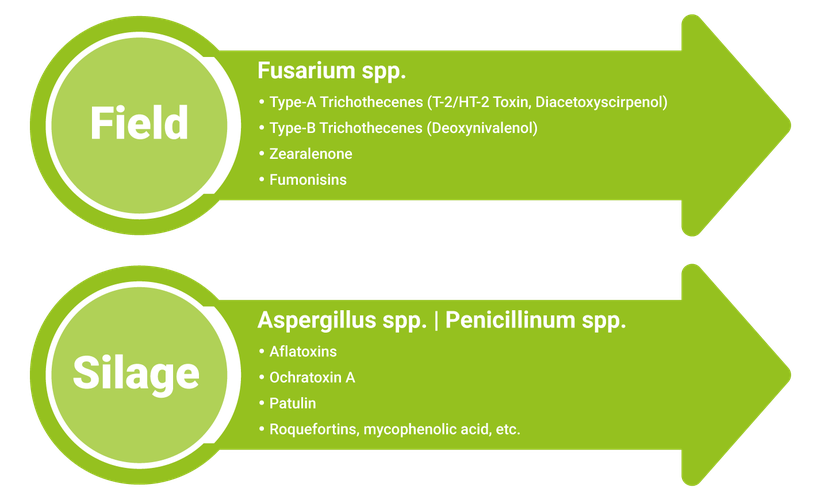 Figure 1: Various possibilities for contamination of grain silage.
Grass silage and green forage can also be contaminated with deoxynivalenol, ergot alkaloids or other mycotoxins. Overall, there is a risk of a wide variety of different mycotoxins from many different sources. This is aggravated by the high dry matter intake of a dairy cow, which consequently leads to a higher total amount of mycotoxins ingested.
Reduced or insufficient detoxification.
Another possible problem, as mentioned above, is the reduced degradation of mycotoxins in the rumen. Scientific studies show that there is a clear correlation between mycotoxins and the quality of the rumen microbiome and its performance. Although the degradation of mycotoxins is more intense in lactating animals due to increased microbiome activity, decreased pH values as well as a shortened passage time have a negative effect on the degradation of mycotoxins. Both are frequently observed circumstances in high-yielding cows and are strongly influenced by the ration formulation.
One of the mycotoxins, zearalenone (ZEA), is partially degraded to a form with an effect even more intense than that of the original molecule. ZEA is known for its estrogen-like effect. Its degradation product, α-zearanelol, has an even higher affinity for estrogen receptors than ZEA itself.
Effects on animal health and performance.
There is a very significant risk that relevant amounts of mycotoxins will not be degraded in the rumen. This results in a generally unspecific reduction in zootechnical performance and animal health (Figure 2).
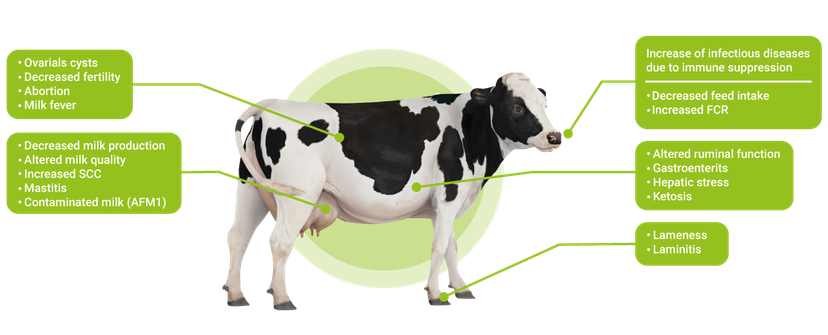 Figure 2: The clinical picture develops as a result of the direct cytotoxic effects of the various mycotoxins as well as the metabolic stress they cause. Thus, mycotoxins can also promote the development of complex metabolic disorders and inflammatory diseases. Laminitis is a good example.
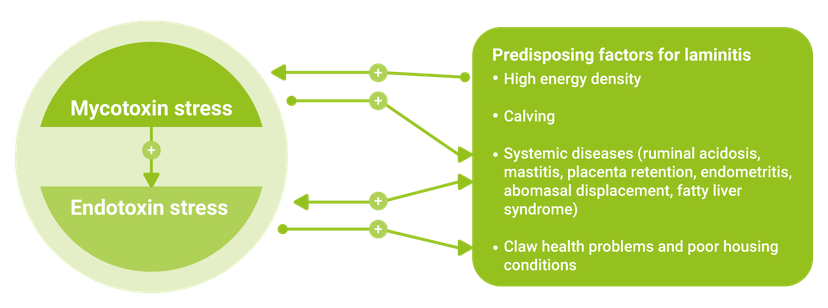
Laminitis is a multifactorial, metabolic disease that leads to an aseptic inflammation of the hoof corium and manifests itself in painful lameness. It develops through an interplay of many predisposing factors that lead to impaired microcirculation of the hoof corium and alteration of the retaining apparatus of the hoof bone. The following predisposing factors can be mentioned in this context:
Feeding (especially a high energy density)
Parturition
Systemic diseases such as rumen acidosis, mastitis, placenta retention, endometritis, abomasal displacement, fatty liver syndrome
Hoof health problems and poor housing conditions
An increased endotoxin load often plays an important role in these various factors. Endotoxins are components of the cell walls of gram-negative bacteria. When they enter the bloodstream, this can lead to a dose-dependent inflammatory response. Since mycotoxins, even in small amounts, damage the integrity of the gastrointestinal barrier, they promote the uptake of endotoxins from the intestinal lumen. Thus, it becomes clear how complex the interactions of different toxins and metabolic diseases are.
What is the key to effective toxin management?
Complex events typically require an equally complex approach. Thus, a single measure is unlikely to provide the solution to all problems. It is therefore important to avoid as many negative factors in the animals’ environment as possible. One such negative factor is mycotoxins. Fortunately, there are effective, specific counterstrategies available in the form of toxin binders.
As a highly effective toxin binder, B.I.O.Tox® Activ8 contains comprehensively tested surface-activated binding components that can reliably bind all relevant mycotoxins. B.I.O.Tox® Activ8 also contains a phytogenic component consisting of milk thistle and grape seed extracts. With regard to the cytotoxic effects of mycotoxins and the metabolic stress they cause, the polyphenols contained in this phytogenic component can help protect the animals' organism from damage. Furthermore, they offer added value by relieving metabolic pressure, e.g. in the case of oxidative stress.
Increased endotoxin stress can result from a variety of causes. Consequently, a viable solution requires a more conceptual approach. Mycotoxins and endotoxin stress are closely linked. This makes widely effective toxin binders an important part of good endotoxin management. Another mainstay comes from all of the measures and feed additives that positively influence the rumen environment as well as the entire microbiome, this includes selected live yeasts. Various additives that support the dairy cow’s liver function and metabolism can also be a valuable component of such a concept.
Conclusion.
Modern dairy cows have an outstanding genetic potential that creates the basic prerequisite for an enormous milk yield as well as good fertility. However, the animals can only realize this potential with the support of a suitable environment. Along with good management, feeding and health, mycotoxins and other negative factors play an important role. The ration formulation for dairy cows comes with a high quantitative and qualitative risk for mycotoxin contamination that exceeds the detoxification capacity of the rumen microbiome. In addition to the harmful effects, mycotoxins closely interact with endotoxin stress as well as with many metabolic diseases.
Effective toxin management protects dairy cows from these negative effects. It therefore plays a key role in creating ideal production conditions for stable animal health and biological performance.


