Unlocking Mineral Efficiency in Poultry with BetaTrace®
BetaTrace® combines betaine anhydrous with essential trace minerals in one patented complex for poultry nutrition. The concept is designed to support mineral availability while providing betaine as an additional methyl group donor. Recent broiler and layer trials demonstrate its potential to maintain performance, bone mineralization and eggshell quality with optimized mineral supplementation. In addition, BetaTrace® supports the antioxidant defense system.
Key Takeaways
Dual functionality: BetaTrace® combines trace mineral supply with betaine-based methyl group donation in one complex.
Broiler performance: A 40 ppm supplemental zinc trial from BetaTrace® achieved a final body weight of 2.70 kg with a FCR of 1.34 at day 35.
Oxidative status: Broilers receiving BetaTrace® had lower liver malondialdehyde concentrations than the sulfate groups.
Layer performance: Full replacement with BetaTrace® at a reduced supplementation level maintained still a high laying intensity of 91% between weeks 50 and 52.
Environmental efficiency: The supplied broiler application reduced zinc and copper excretion significantly while maintaining performance parameters.
Why does trace mineral efficiency matter in modern poultry production?
Modern broilers, layers, breeders, and turkeys must maintain high performance under considerable metabolic demand. Growth rate, laying intensity, feed efficiency, skeletal integrity, immune function, and antioxidant defense all depend on an adequate supply of essential nutrients.
Zinc, copper, manganese and iron play essential roles in numerous physiological processes. However, their nutritional value depends not only on the amount supplied in the diet, but also on how efficiently the animal can absorb and utilize these minerals. Inorganic mineral sources may interact with dietary components and mineral antagonists in the digestive tract, potentially limiting their availability. Therefore, mineral efficiency is not simply a matter of inclusion rate, but of biological availability. This is precisely where organic trace minerals offer advantages. We were already able to demonstrate this great potential of organic trace minerals, for example for breeders with and without heat stress, in a compelling presentation on our glycinates at the XVI European Poultry Conference (Rothstein et al., 2024).
BetaTrace® is Biochem’s range of betaine-bound trace mineral products for all animal categories, including BetaTrace® Zinc, BetaTrace® Copper, BetaTrace® Manganese, and BetaTrace® Iron. The products combine essential trace minerals with betaine anhydrous in a patented organic complex.
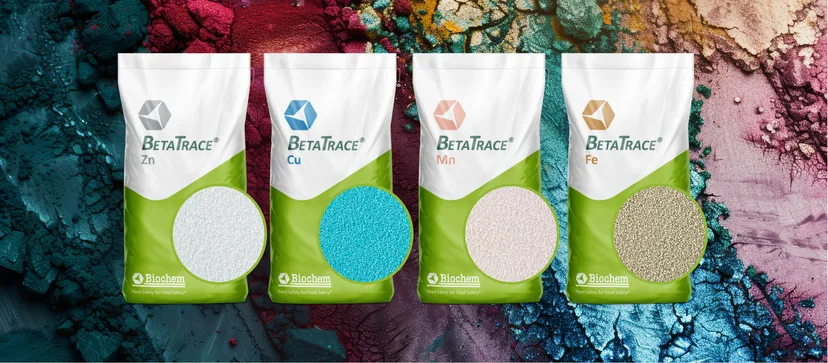 Figure 1: BetaTrace® trace mineral range
How does BetaTrace® combine trace minerals and betaine?
BetaTrace® combines two nutritional components in one patented complex. The mineral component provides zinc, copper, manganese, or iron, while betaine anhydrous supplies methyl groups and contributes to methylation metabolism.
Trace minerals act as cofactors for enzymes involved in antioxidant defense, immune function, tissue integrity, bone development, and nutrient metabolism. Betaine contributes to the remethylation of homocysteine to methionine and is involved in pathways related to methionine metabolism, protein turnover, lipid metabolism, and cellular osmotic regulation.
The biological response depends on the specific mineral, animal category, diet, and supplementation strategy, allowing BetaTrace® to be flexibly integrated into different poultry nutrition programs.
Broiler trial: Can improved zinc bioavailability enhance mineral efficiency without compromising performance?
A 35-day broiler trial compared 80 ppm zinc from zinc sulfate with only 40 ppm zinc supplied through BetaTrace®, alongside a 40 ppm zinc sulfate treatment.
BetaTrace®’s potential to improve zinc efficiency is highlighted by the results presented in Table 1. Despite receiving 50% less supplemental zinc, birds fed 40 ppm zinc from BetaTrace® achieved the highest final body weight (2.70 kg) and an FCR of 1.34 kg/kg. Both performance parameters were comparable to the 80 ppm zinc sulfate treatment (2.60 kg body weight; 1.36 kg/kg FCR), while the 40 ppm zinc sulfate group showed a significantly poorer FCR of 1.42. These findings are also consistent with the BetaTrace® Zn registration trial (EFSA FEEDAP Panel, 2023).
A lower zinc supplementation was also reflected in the mineral parameters. Tibia calcium concentration remained only with BetaTrace® comparable to the 80 ppm zinc sulfate treatment, while phosphorus concentrations were similar across all treatments.
Another notable finding was the significantly lower liver MDA concentration with BetaTrace® (Table 1), indicating a potential benefit for antioxidant defense.
Overall, the ability to maintain broiler performance with 50 % less supplemental zinc underlines the high biological availability of zinc supplied through BetaTrace® and its potential to improve mineral efficiency.
Parameter | 80 ppm zinc sulfate | 40 ppm zinc sulfate | 40 ppm zinc from BetaTrace® |
|---|---|---|---|
Final body weight, kg | 2.60 | 2.65 | 2.70 |
FCR 0-35d, kg/kg | 1.36a | 1.42b | 1.34a |
Liver zinc, ppm | 21.4 | 21.2 | 21.2 |
Tibia zinc, ppm | 34.7 | 35.2 | 35.9 |
Liver MDA, nmol/mg protein | 0.51ᵇ | 0.54ᵇ | 0.41ᵃ |
Tibia calcium, % | 36.3ᵇ | 35.6ᵃ | 36.5ᵇ |
Tibia phosphorus, % | 17.4 | 17.2 | 17.3 |
Table 1: Results of the broiler study, including analyses of the liver and tibia d35. Statistical significance is reported as p<0.05. Source: Rothstein et al. 2025a
What do the broiler results mean for mineral formulation?
The results support the potential of an optimized zinc supplementation strategy using a highly available source. They do not establish one universal inclusion rate for all diets, breeds, production systems, or regulatory markets.
For feed formulators, the practical value lies in evaluating whether lower supplemental mineral levels can meet the bird’s biological requirements without compromising performance, bone mineralization, or welfare-related parameters.
Can BetaTrace® support performance in aging laying hens?
As hens progress into the later laying period, maintaining production and eggshell quality becomes increasingly important. In a scientific research station, inorganic trace minerals were fully replaced by BetaTrace® while the overall supplementation level was reduced.
Despite the reduced supplementation level, hens maintained a high laying intensity of 91% between weeks 50 and 52, as shown in figure 2 below. At week 52, eggs from the BetaTrace® group reached a shell breaking strength of 43.9 N, while shell thickness remained stable at approximately 0.36–0.37 mm.
The results are particularly relevant for aging hens, as calcium availability is critical for maintaining both skeletal reserves and eggshell formation. In the broiler trial, BetaTrace® supported calcium deposition in the tibia at the reduced zinc supplementation level. In laying hens, efficient mineral utilization may likewise help support the calcium supply needed for eggshell formation.
Overall, the combination of high laying intensity, strong eggshells and stable shell thickness highlights the potential of BetaTrace® to support performance and eggshell quality during the later laying period.
 Figure 2: Laying intensity, eggshell breaking strength and shell thickness at the end of the trial period.
Can optimized organic trace mineral supply reduce mineral excretion?
Lower mineral supplementation can contribute to a more resource-efficient feeding strategy when animal performance and nutritional adequacy are maintained. A recent trial investigated whether BetaTrace® could support this approach while reducing the amount of minerals excreted by the animals.
The results are encouraging: zinc excretion was reduced by 30% and copper excretion by 37% with BetaTrace®. At the same time, growth performance, FCR and foot pad health were maintained (Rothstein et al. 2025b).
This combination of maintained performance and lower mineral excretion highlights the potential of BetaTrace® to improve mineral efficiency and contribute to a more resource-efficient feeding strategy.
One patented complex, multiple poultry applications
BetaTrace® provides a common formulation concept for different poultry categories which are presented in figure 3.
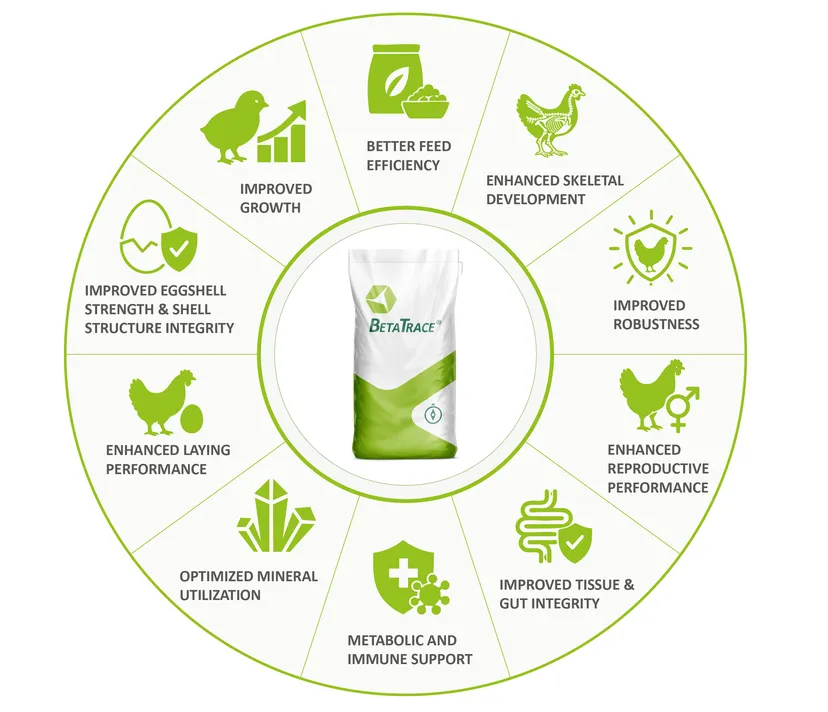 Figure 3: Effects of BetaTrace® in Poultry nutrition
Conclusion: Make better use of supplied minerals
The future of trace mineral nutrition is not necessarily about adding more. It is about making better use of the minerals supplied by considering mineral source, inclusion level, animal requirements and production goals.
BetaTrace® combines betaine anhydrous with essential trace minerals in one patented organic complex. By combining efficient mineral supply with the nutritional value of betaine, BetaTrace® offers a flexible approach to modern poultry nutrition.
The concept can be adapted to different minerals, animal categories and feeding strategies, giving nutritionists and producers the flexibility to develop solutions that match their specific nutritional and production objectives.
Explore how BetaTrace® can fit into your poultry mineral strategy. The Biochem team is available to discuss formulation objectives, trial data and application-specific supplementation strategies.
References
EFSA FEEDAP Panel (2023): Safety and efficacy of a feed additive consisting of a zinc(II)–betaine complex for all animal species (Biochem Zusatzstoffe Handels- und Produktionsges. mbH). EFSA Journal 2023; 21(2):7819, 19 pp (DOI: https://doi.org/10.2903/j.efsa.2023.7819)
Rothstein S., Lichtenstein H., Schlagheck A., Kaczmarek S. A. (2025a): Betaine bound Zinc allows 50% Zinc Reduction in Broiler diets without performance decrease. European Symposium Poultry Nutrition June 2025, Maastricht (https://www.researchgate.net/publication/413836151_Betaine_bound_Zinc_allows_50_Zinc_Reduction_in_Broiler_Diets_Without_Performance_Decrease)
Rothstein S., Lichtenstein H., Schlagheck A. (2025b): 50% less trace minerals in broiler feed: effects of betaine bound minerals on performance and heavy metal excretion. Frühjahrstagung der Deutschen Vereinigung für Geflügelwissenschaften e.V. (German Branch of WPSA), March 2025, Göttingen. (https://www.researchgate.net/publication/413835488_50_less_trace_minerals_in_broiler_feed_effects_of_betaine_bound_minerals_on_performance_and_heavy_metal_excretion)
Rothstein, S., Schlagheck, A., Landwehr, B., Keller, S. (2024). Broiler breeder hens significantly benefit by replacing inorganic trace minerals with glycinates. In A. C. Barroeta, C. Garcés Narro, & G. Sayegh (Eds.), XVI European Poultry Conference of the WPSA: Book of abstracts (p. 193). European Federation of the WPSA.
BetaTrace® product information. BetaTrace® Zinc
BetaTrace® product information. BetaTrace® Manganese
BetaTrace® product information. BetaTrace® Copper
BetaTrace® product information. BetaTrace® Iron


