BetaTrace®: Securing the Future of Dairy Performance with Rumen Bypass Betaine.
The transition period—from late pregnancy into early lactation—remains the most challenging phase in the dairy cycle. Both nutritionists and farmers face constant pressure to implement nutrition and management strategies that effectively prevent metabolic disorders, sustain optimal dry matter intake, and ultimately maximize milk yield in the subsequent lactation.
The Foundational Role of Methyl Donors.
At the cellular level, transition success hinges on functional nutrients known as methyl donors. These compounds are essential regulators of key metabolic and immunological pathways through one-carbon metabolism. Modulating the dietary supply of methyl donors during high-stress periods, such as the neonatal and peripartal phases, is a proven way to significantly boost the health and production of dairy cows.
Betaine: A Critical Dual-Action Nutrient.
Betaine (trimethylglycine) performs two primary, vital functions within the cow. First, it acts as a powerful osmolyte, maintaining cellular integrity and shielding cells from stress. Second, and perhaps most critically for metabolism, it serves as a key methyl donor for the liver’s conversion of homocysteine into methionine, a reaction mediated by the enzyme betaine-homocysteine methyltransferase (BHMT).
Because BHMT is highly expressed in the liver, kidneys, and pancreas of ruminants, betaine plays a central functional role in these tissues. Its metabolic support for the liver is particularly important, as adequate betaine availability has critical implications for preventing costly conditions like fatty liver disease.
By supporting the re-methylation of homocysteine, betaine conserves methionine, ensuring this essential amino acid is available for other vital methyl donation tasks and for incorporation into milk proteins during lactation. In transition cows, betaine enhances the availability of L-carnitine and phosphatidylcholine, key components for optimal fat and energy metabolism (Figure 1). Furthermore, betaine offers valuable anti-inflammatory benefits by upregulating the antioxidant defense system and improving impaired sulfur amino acid metabolism.
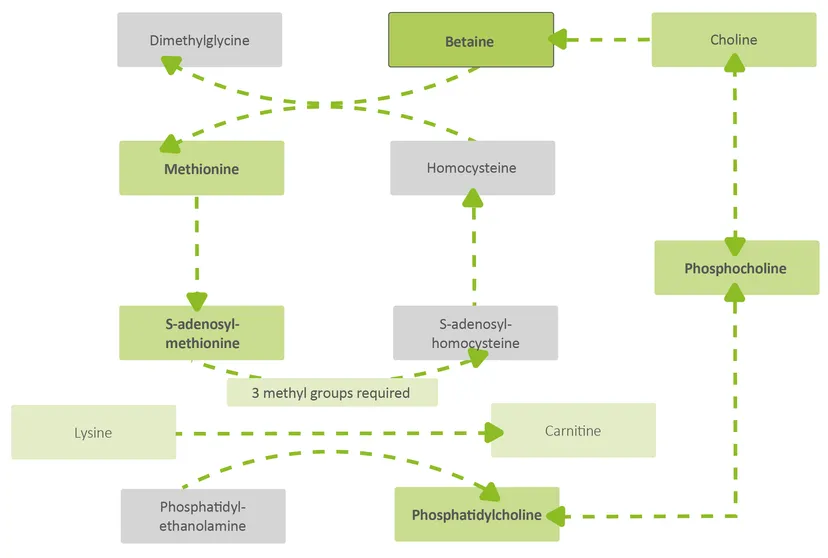 Figure 1: Phosphocholine and phosphatidylcholine are formed from choline via the cytidine diphosphate (CDP) choline pathway. The formation of betaine from choline is irreversible. Betaine, when oxidized, provides a methyl group to homocysteine to form methionine. Methionine is converted to S-adenosylmethionine, an important methyl donor. Phosphatidylcholine can be formed endogenously by methylating phosphatidylethanolamine in a three-step process involving S-adenosylmethionine via the phosphatidylethanolamine N-methyltransferase pathway (adapted from Artegoitia et al., 2014).
The Rumen Barrier: Why Protection is Essential.
The benefits of betaine have long been recognized in monogastric animals, yet its use in ruminants presents a unique hurdle: rumen degradation. Unprotected betaine is rapidly degraded in the rumen, with studies showing an approximate 45 % per hour degradation rate in vivo, leading to its complete disappearance within 4 to 6 hours after feeding. This rapid loss means that unprotected betaine cannot be efficiently absorbed and utilized.
Introducing BetaTrace®: Guaranteed Intestinal Availability.
The solution lies in rumen-protected (bypass) betaine. Inhibiting rumen degradation ensures that this valuable nutrient is absorbed in the small intestine. This successfully increases the supply of methyl groups and boosts methionine availability via BHMT, providing maximum support during the critical transition period and subsequent lactation.
Conventionally, protecting ingredients like methionine and choline has involved encapsulation using lipid coatings (fatty acids and triglycerides). The innovative feed additive, BetaTrace®, offers an advanced approach. BetaTrace® is a unique complex of betaine anhydrous and essential trace minerals—zinc, manganese, copper, and iron—combining the power of organically bound minerals with intestinally available betaine.
Scientific Evidence: Evasion of Rumen Degradation.
To validate if the betaine–trace mineral complex survives rumen passage, BetaTrace® was rigorously tested in vitro using the gas test, a standardized method for analyzing feed ingredients. Rumen fluid was incubated with either BetaTrace® or unprotected betaine anhydrous. The results were conclusive: after four hours, betaine from BetaTrace® remained at the initial level, and over 50 % was still present after eight hours.
In stark contrast, betaine levels in the control (betaine anhydrous) were undetectable after just four hours of incubation. Since fluid turnover in the rumen is much quicker than feed passage (hours versus days), this high stability indicates that the soluble BetaTrace® complex is highly effective at evading rumen degradation, securing its promise as a source of bypass betaine and a reliable methyl group donor for ruminants (Figure 2).
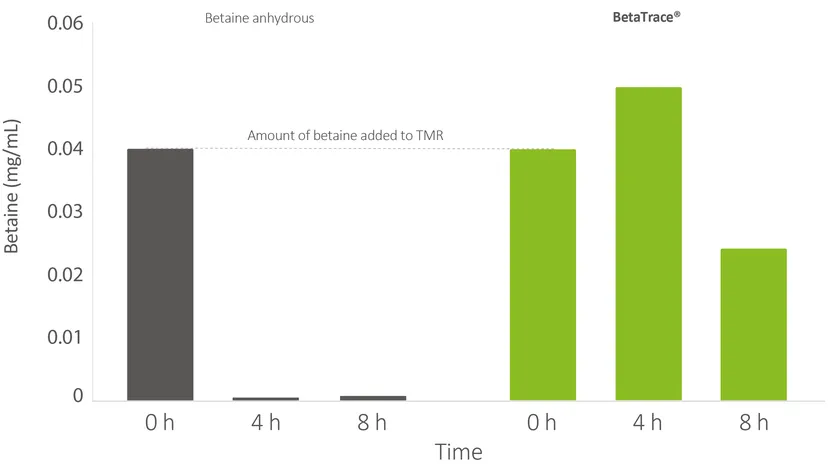 Figure 2: Betaine levels after 4 h and 8 h. Control: pure betaine anhydrous, test group: BetaTrace® (n=3).
Proven Performance in Lactation.
Further research supports the profound impact of protected betaine. A recent study examining rumen-protected betaine (RPB) supplementation as a partial replacement for methionine demonstrated significant benefits for mid-lactation cows. Compared to the control group, cows receiving either RPB or rumen-protected methionine (RPM) showed higher milk yields and greater milk fat and protein content. Notably, the RPB group also saw a reduction in Somatic Cell Count (SCC) compared to both the RPM and control groups. This indicates that RPB supplementation effectively enhances lactation performance, likely by increasing amino acid supply and improving fat and protein synthesis, while also successfully sparing methionine on moderately methionine-deficient diets (Figure 3).
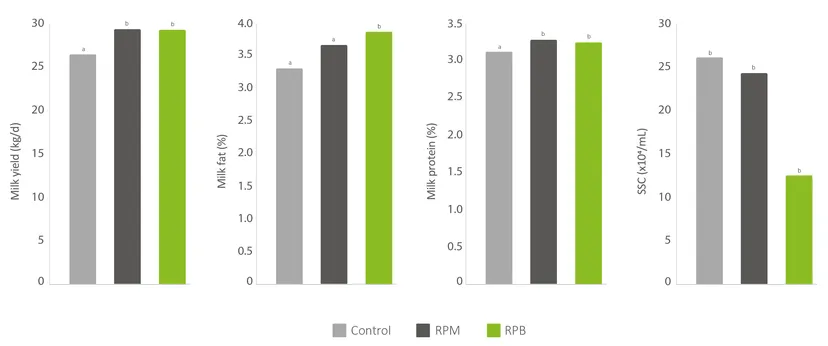 Figure 3: Different letters indicate means that differ significantly (p<0.05); n=12 Wang et al., 2020).
The Practical, All-in-One Solution.
BetaTrace® delivers betaine that resists rumen degradation to support BHMT-mediated re-methylation. This critical action reinforces the cow’s methyl economy, preserving methionine for protein and phosphatidylcholine synthesis, ultimately reinforcing liver function, bolstering metabolic resilience, and optimizing milk performance. By combining organic trace minerals with protected betaine, BetaTrace® provides a practical, all-in-one solution for optimal cow health and lasting production success.


