Mycotoxins: A Pervasive Challenge.
Mycotoxins are a large and diverse group of naturally occurring toxic substances produced by fungi (molds). These harmful compounds readily contaminate a wide array of raw materials, posing a significant threat across the entire feed and animal production value chain. Their presence can compromise animal welfare, severely reduce animal performance, and ultimately impact the sustainability and profitability of the industry.
Understanding Mycotoxin’s Impact on Livestock.
Among the many known mycotoxins, those of primary concern to the industry due to their prevalence and adverse effects on livestock include aflatoxins (AF), deoxynivalenol (DON), ochratoxin A (OTA), T-2 toxin (T-2/HT-2), fumonisins (FB), zearalenone (ZEA) and the ergot alkaloids. These compounds can cause a wide range of adverse health effects, affecting various vital systems like the liver and the kidneys, disrupt the central nervous system, or exert unwanted estrogenic effects.
At a more fundamental, cellular level, mycotoxins exert their damage through several key mechanisms. They can inhibit protein synthesis, alter normal gene expression, and cause direct membrane damage. These actions result in structural and functional changes in proteins and a reduction in overall cell performance. In addition, all mycotoxins contribute to oxidative stress in cells by promoting lipid peroxidation, essentially damaging cell membranes.
While this cellular damage is not immediately visible, its cumulative effects manifest over time as broader disease and reduced organ function. Tissues characterized by high protein turnover and rapid growth, such as the immune system and the gut epithelium, are particularly vulnerable to mycotoxin exposure. As a result, animals exposed to mycotoxins often exhibit more subtle and non-specific signs. These can include decreased weight gain, reduced feed efficiency, decreased egg and milk production, and various reproductive disorders, making diagnosis difficult and vigilance critical.
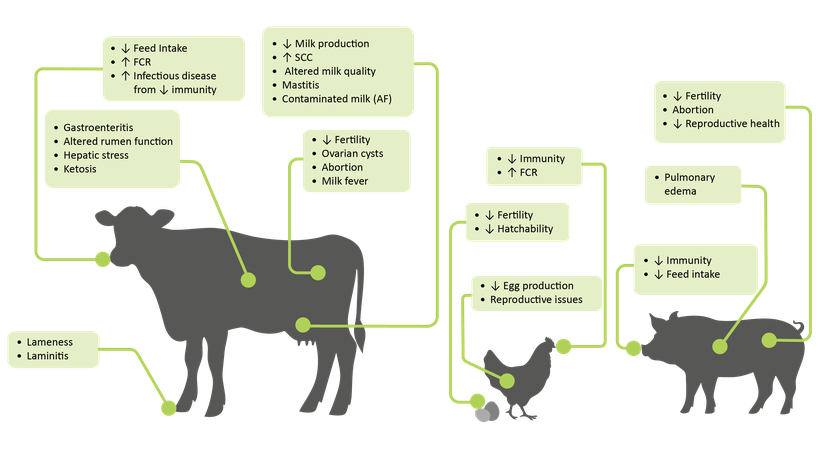 Figure 1: The effects of mycotoxins on animals depends on the species of animal, the type of mycotoxin and the level of exposure, as well as the length of exposure and the health of the animal.
Documenting Mycotoxin Prevalence.
Mycotoxins are a widespread concern across various livestock feeds, from concentrates to hay and silage. Research consistently shows that major feed commodities are frequently affected, indicating that contamination rates can range from 2 % to 100 % in corn and silage, between 7% and 100 % in wheat and wheat bran, and from almost 24 % to 100 % in soybean meal.
This high prevalence extends into finished feeds with contamination rates varying widely (Figure 2). One comprehensive survey on mycotoxin occurrence spanning feed samples collected across the Americas, Europe, and Asia, revealed that a substantial 81% of samples tested positive for at least one mycotoxin. Even total mixed rations show significant variation, with contamination reported from “not detected” up to 66 % in samples from England, and as high as 80 % to 100 % in those from South Africa. These figures underscore a pervasive global challenge.
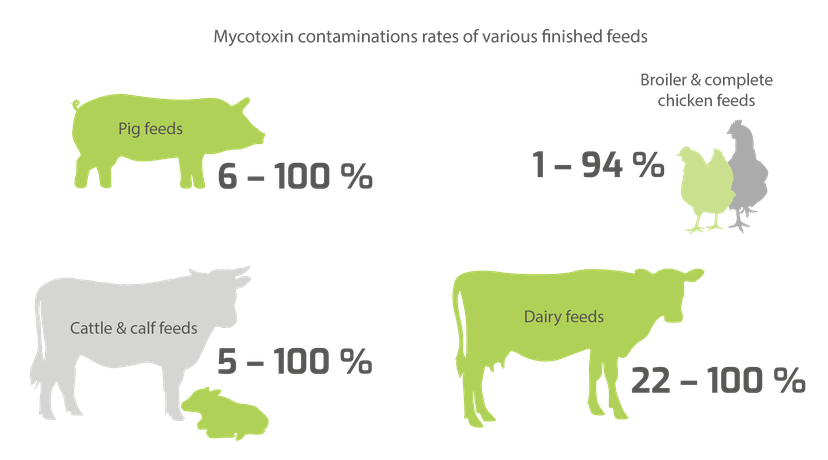 Figure 2: Levels of mycotoxin contamination in various finished feeds.
The Impact of Climate Change.
Mycotoxins are persistent in animal agriculture and their presence can begin long before harvest and continue through drying, processing, and storage. The development of mycotoxins is largely controlled by environmental conditions. Key factors include temperature and humidity, which directly affect fungal growth and toxin production. But it’s not just climate; pH levels, nutrient availability, and insect activity also play a significant role. Other elements that affect contamination levels include geographic location, agricultural practices, the specific year of harvest, and the length and conditions of storage.
As global climates become hotter and more humid, experts expect significant changes in the way mycotoxins develop and spread. One important factor is how easily the crop itself can be invaded by fungi. Each mold species thrives under its own unique conditions for growth and toxin production. This means that climate change is likely to change which molds—and therefore which mycotoxins—become more prevalent.
Multiple Mycotoxins and Synergistic Effects.
Mycotoxins rarely occur in isolation. It’s very common for raw materials and feeds to be contaminated with multiple types of mycotoxins at the same time. This occurs because molds can produce multiple toxins simultaneously, and feed materials can be infected by different fungal species, sometimes in rapid succession. In addition, complex feeds made from different ingredients are particularly susceptible to multi-contamination.
Scientific reports consistently show widespread co-contamination. For example, studies often find AFL with ZEA in maize, or FB with DON. Silage often shows co-occurrence of DON, ZEA, and T-2/HT-2 toxins. These findings emphasize that animals are often exposed to more than one mycotoxin at a time.
This multiple contamination is a serious concern because the effects on animal health and performance are often more than additive but can be synergistic. This means that the combined toxicity is not simply the sum of the effects of individual mycotoxins; instead, their interaction can result in a multiplied or significantly enhanced negative effect. Therefore, increased attention to the co-occurrence of mycotoxins is essential to truly understand and mitigate risks.
Why Mycotoxin Monitoring is Essential.
This growing threat has brought mycotoxins to the forefront as one of the critical hazards in raw materials and highlights the need for robust management strategies. As such, monitoring mycotoxin contamination in raw ingredients and finished feed is simply good practice and is essential in assessing potential health risks to livestock and formulating an appropriate mitigation strategy.
Knowing if and how much mycotoxin is present is critical to ensuring feed safety. Fortunately, there are several reliable and sensitive methods for detecting these compounds. Each method has its own strengths and weaknesses, so it is important to choose the right tool for the job.
Understanding Mycotoxin Detection.
Methods for detecting mycotoxins can be broadly categorized into rapid screening and confirmatory methods performed in a lab. Screening methods are invaluable for quick testing and on-site monitoring. Often packaged as easy-to-use kits, they provide quick insight into the presence of mycotoxins in raw materials. They’re ideal when time is of the essence or more sophisticated laboratory equipment is not readily available. These tests can either simply confirm the presence or absence of a mycotoxin (qualitative) or provide a semi-quantitative or quantitative result (indicating how much is present). Common screening approaches include immunoassay-based methods, biosensors, and non-invasive techniques.
When precision and unambiguous confirmation are required, chromatographic methods coupled with advanced detection systems, like the Liquid Chromatography-Tandem Mass Spectrometry, or LC-MS/MS, are the gold standard. These are the most widely used strategies for accurate mycotoxin quantification and are often used as reference methods to validate all other tests. They provide exceptional selectivity, accuracy, and reproducibility. The trade-off, however, is that they require expensive, sophisticated equipment and the expertise of skilled laboratory personnel.
Precision in Mycotoxin Management.
A hazard detected is a hazard reduced and effective mycotoxin management depends on accurate information. Although not always easy, early detection of potential mycotoxin contamination in raw materials and finished feeds allows the right action to be taken at the right time. This early detection directly influences the next critical step: implementing appropriate mitigation strategies.
For example, the inclusion of a toxin binder is a promising strategy that is guided by the level of feed contamination detected. Due to a dose-dependent mode of action, higher levels of mycotoxin concentrations in the feed necessitate an increase in the toxin binder inclusion rate for optimal protection. Additionally, when choosing the suitable inclusion rate, the targeted animal species, its age, as well as use should be considered.
Evaluating Toxin Binders: The Role of In Vitro Studies.
Toxin binders are essential tools for mycotoxin management. Some binders are effective against specific mycotoxins, while others have broader capabilities, binding multiple mycotoxins simultaneously. The primary goal of a binder is to interact with mycotoxins in the animal’s digestive tract and form stable bonds along the changing pH values. This critical process prevents the mycotoxins from being absorbed into the animal’s system, allowing them to be safely eliminated from the body in waste products.
To assess the ability of a compound to bind toxins, mycotoxin binding analysis performed in the laboratory is a valuable screening tool. While these in vitro tests are not intended to replace live animal feeding studies, they serve as a valuable pre-screening tool and play a key role in the early stages of product evaluation, contributing to efficient and cost-effective toxin binding assessment and streamlining the product evaluation process.
Biochem’s Advanced Mycotoxin Detection and Tailored Solutions.
Different testing solutions like offering rapid testing of raw materials by lateral flow test devices are included in our MycService. However, when it comes to accurately understanding mycotoxin contamination in raw materials and finished feeds, we rely on the collaboration with specialized institutions that use the most powerful analytical technology available: Liquid Chromatography-Tandem Mass Spectrometry, or LC-MS/MS. This laboratory method offers superior sensitivity and versatility compared to rapid field tests such as lateral flow assays, providing deeper insight into the safety profile of your feed. Through our services, you can choose from comprehensive test series such as MycAnalysis Basic and MycAnalysis Plus, designed to meet different analytical needs.
Mycotoxin analyses using LC-MS/MS consistently demonstrate the widespread nature of multi-mycotoxin contamination. For example, our data from recent years show that a significant 69 % of samples contained at least two mycotoxins, while only 19 % contained only one, and only 12 % had no detectable mycotoxins (below the limit of detection). These results underscore the prevalence of multiple mycotoxins in feed and reinforce why thorough testing is essential.
Beyond the simple detection of mycotoxin contamination, our comprehensive assessment includes precise recommendations for the required inclusion rates of toxin binders. This customized approach ensures that you receive actionable advice based on the actual mycotoxin profile in your feed to effectively mitigate risk and protect animal health and performance.
Evaluate the Binding Efficiency of Your Toxin Binder.
Biochem offers a comparison of your toxin binder on in vitro mycotoxin binding properties with an internal standard performed by an external lab. The binding efficiency shows the adsorption capacity of a mycotoxin binder under the physiological pH change from the acidic pH in the stomach to the nearly neutral pH in the small intestine, measured at a determined concentration of mycotoxins and binding agents! In this way, you can be confident your selection of toxin binder is suitable for the level and type of mycotoxin contamination.
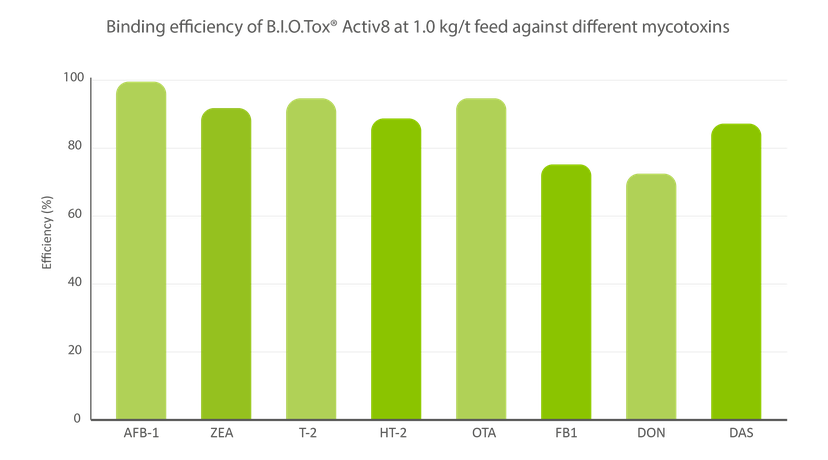 Figure 3: The binding efficiency of 1.0 kg/t feed B.I.O.Tox® Activ8 against different mycotoxins.
Mycotoxin formation is a complex and multifactor phenomenon whose worldwide contamination and distribution patterns are predicted to be significantly affected by climate change because of the appearance of favorable environmental conditions for fungal proliferation in uncommon places. Backed by our years of experience, MycService is a flexible, reliable service that offers the most effective solution for dealing with mycotoxins.


