Rethinking Trace Minerals: Healthier Shrimp, Cleaner Planet with E.C.O.Trace®.
Trace minerals are crucial for almost every biochemical and metabolic process in animals. They form part of enzymes and help coordinate many biological functions, making them vital for animal health and productivity (Figure 1). Trace minerals are an integral part of an optimal diet ensuring animals can perform their best structurally, physiologically, and metabolically.
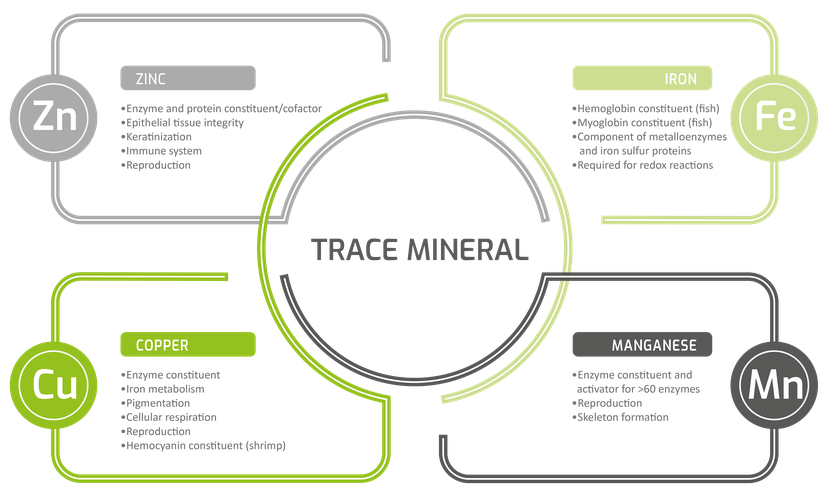 Figure 1: The importance of trace minerals in the health of aquatic animals.
The Balancing Act: Challenges of Traditional Mineral Supplementation.
While feed mills and farmers increasingly use trace mineral supplements to ensure animal health and peak performance, determining precise requirements remains difficult. Particularly in aquaculture, there is a wide range of aquatic species with completely different life cycles, habitats, and nutritional requirements that affect their trace mineral status. Therefore, optimal levels of trace minerals are less clearly defined. Subclinical or mild deficiencies can easily go unnoticed, leading to non-specific symptoms and reduced performance. Therefore, diets often include large safety margins, to account for variations in dietary intake, physiological status, and dietary antagonists and are based on the low dietary availability of inorganic sources of trace minerals.
From Feed to Footprint: The Environmental Cost of Mineral Imbalance.
A noted effect of high inclusion rates of trace minerals in the diet was their action as a type of growth promoter. This is particularly true for Zn and Cu, which can have antimicrobial effects at pharmacological doses. However, the body tightly regulates the absorption of these minerals, meaning excess amounts are excreted into the environment.
Animal feed is a major source of Zn and Cu buildup in agricultural areas, with approximately 80–95% of these minerals excreted into manure. This is also seen in aquaculture with an accumulation of Cu and Zn in fish farm sediments and even on the seabed under net cages.
Excess minerals, such as Cu and Zn, in sediment and water can harm aquatic animals and affect their performance. Studies have shown that excess Cu in pond water resulted in decreased performance of juvenile shrimp. Furthermore, exposure to excess Cu resulted in an increased frequency of molting cycles, making them susceptible to cannibalism and pathogens.
Heavy metals such as Zn and Cu may encourage antibiotic resistance by facilitating the transfer of resistance genes. A study investigating pond sediment contamination with Cu and Zn and the antimicrobial resistance profiles of E. coli from selected fish farms found that all isolated E. coli samples were metal-tolerant and showed resistance to at least one antibiotic. Additionally, the authors found significant correlations between concentrations of metals in pond sediment and antibiotic resistance in E. coli.
Towards Precision and Protection: The Drive for Better Mineral Solutions.
Much research is being done to find ways to reduce the environmental impact of trace minerals without compromising animal performance. Since an animal’s requirement for trace minerals depends on its growth, development, and production status, tailored supplementation strategies are needed to overcome deficiencies and promote optimal productivity. To achieve this, it is necessary to feed more precisely according to individual needs, which can be achieved, for example, through multi-phase feeding strategies. Another strategy is to use trace mineral sources with the highest possible bioavailability.
E.C.O.Trace®: Unlocking Superior Mineral Absorption, Sustainably.
Conventionally, inorganic trace mineral salts like sulfates have been used in feed formulations to meet the mineral requirements of aquaculture species. However, although they are relatively inexpensive, they have been found to be inefficient. The low pH of the upper gastrointestinal tract reduces the availability of inorganic salts by causing dissociation. This makes the minerals susceptible to various nutrient antagonisms that can impair absorption and form insoluble precipitates in the lower intestine, making them unavailable for absorption. Nonetheless, mineral loss resulting from the interaction between inorganic trace minerals and phytate, which forms insoluble complexes, has also been documented in shrimp with a rather neutral stomach pH.
Studies have shown that increasing mineral levels in the diet to compensate for losses of bioavailable trace minerals may have negative effects. High levels of trace minerals, which need to pass the same metal transporter, may reduce the uptake of other minerals due to preferences of the metal transporter. This antagonism has been described, for example, between Zn and Cu, Zn and Fe, Fe and Cu, and many more.
Improving mineral utilization is an effective way to improve animal health and reduce environmental impact. Organic trace minerals—trace elements complexed with amino acids or small peptides—are increasingly being used in formulations in place of inorganic sources due to the apparent benefits of improved utilization.
Complexing minerals with organic compounds increases mineral absorption in the gut by reducing the interaction between the mineral and other potential chelators. This can prevent the formation of insoluble complexes. Organic binding of metals better protects them from adverse antagonistic effects in the gut and allows them to reach the intestinal wall and be absorbed. Therefore, formulating diets with highly bioavailable organic trace minerals is a strategy to reduce trace mineral excretion.
E.C.O.Trace® organic trace minerals are organic forms of trace minerals bound to the amino acid glycine, also known as glycinate. This has many advantages over inorganic forms of trace minerals such as sulfates. The trace mineral-glycine complex provides superior stability, even at the low pH of the gastrointestinal tract. This results in fewer insoluble complexes between different dietary compounds in the gut and less antagonistic effects between mineral transport. In addition, effective transport to the intestinal wall and a favorable absorption rate result in increased bioavailability.
Proof in the Pond: E.C.O.Trace® Delivers More with Less.
The effect of E.C.O.Trace® organic trace minerals on shrimp performance was tested in an 8-week feeding study. Shrimp with an initial weight of 1.26 g were separated into two groups, with three replications. Each replication consisted of 200 shrimp in 2 m2 cages. The shrimp were fed three times a day, ad lib, one of two diets supplemented with either a sulphate trace mineral premix or “E.C.O.Trace® Shrimp” trace mineral premix. The diets were matched except for trace mineral content, with the E.C.O.Trace® diet containing 50% less Zn, Cu, Mn, and Fe than the sulfate diet (Table 1).
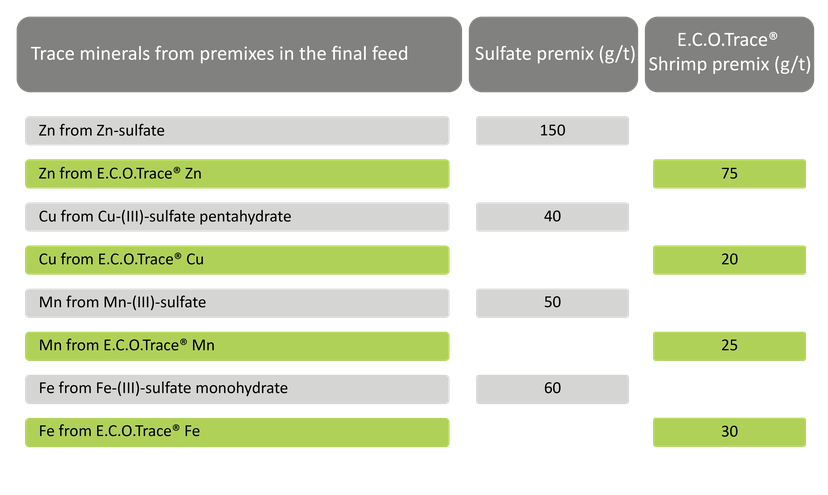 Table 1: Trace mineral level of test diets coming from premixes.
Shrimp fed the E.C.O.Trace® trace mineral diet showed slightly better growth and 6.3 % lower FCR compared to shrimp fed the sulfate trace mineral supplemented diet (Figure 2).
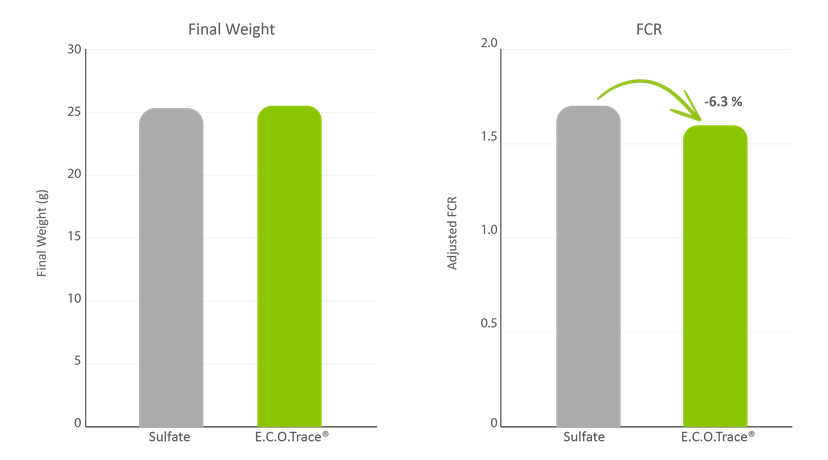 Figure 2: Good performance with increased feed efficiency
In addition, shrimp fed the E.C.O.Trace® diet had lower mortality at 8 weeks compared to the sulfate-supplemented diet (5.8% vs. 7.3%; data not shown). These improvements become even more interesting when you consider the very high average daily gain of about 0.4 g (data not shown). E.C.O.Trace® even appears to facilitate high-performance shrimp production. Analysis of the shrimp also demonstrated that despite 50% lower trace mineral supplementation the whole-body mineral content of shrimp was almost the same between the two diets (Figure 3).
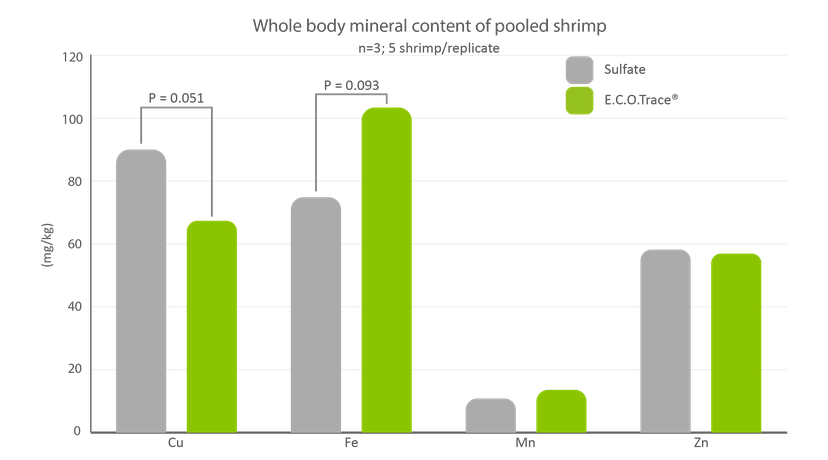 Figure 3: Whole body mineral content of pooled shrimp – with 50% less trace minerals the E.C.O.Trace® premix achieved similar or even better body mineralization. Lower Cu levels might be a result of high water temperatures. There was no deficiency seen, as mortality and feed efficiency was better within the E.C.O.Trace® group.
Body Cu levels were a bit lower within the E.C.O.Trace® group. This could be linked to the very hot water temperature of 30–35° C throughout the trial period. Since Cu is an important part of the shrimp’s oxygen carrier hemocyanin, shrimp seem to have an increased demand for Cu under these conditions. However, there was no lack of performance, indicating a sufficient supply of this valuable trace mineral.
This demonstrates the superior bioavailability of organic E.C.O.Trace® trace minerals compared to inorganic sulfates and, consequently, that mineral losses to the environment are dramatically reduced. This reduced mineral loss reduces the accumulation of potentially harmful metals such as Zn and Cu in ponds, which can be toxic to shrimp, and increases the risk of Cu and Zn resistant bacteria.
The E.C.O.Trace® Advantage: Boosting Performance, Protecting Our Planet, Enhancing Profitability.
Increased feed efficiency, as seen as a reduction of FCR, results in generally lower feed costs during the whole production of shrimp. This economic advantage not only compensates for the costs of E.C.O.Trace®, but also contributes to higher profitability. Depending on feed costs, a return of investment of greater than 10 is possible.
To conclude, trace minerals may form a small part of animal feed, but they make a significant impact. Enhanced absorption with E.C.O.Trace® trace minerals reduces waste, supports shrimp health, and decreases environmental contamination. Choosing E.C.O.Trace® organic trace minerals benefits animals, farmers, and the planet!


