Navigating Weaning Challenges: Optimizing Piglet Health and Performance.
Weaning, a critical part of swine production, is challenging for young piglets. Commercially weaned pigs transition at 3–4 weeks, much earlier than the natural weaning age of 12–17 weeks. This early separation, along with dietary changes and social regrouping, causes stress that can lead to reduced feed intake, weight loss, diarrhea, and increased mortality. Understanding these stressors and their effects on the piglet’s digestive system is essential for developing effective management and nutritional strategies to support a healthy weaning transition.
What is a “Healthy Gut?”
The small intestine’s interior features finger-like projections called villi, made up of intestinal cells with smaller projections called microvilli. Intestinal cells are replaced in “crypts,” where stem cells divide and differentiate into mature intestinal cells and mucus-producing goblet cells. These cells migrate to the villus tip and are eventually shed into the intestinal lumen (Figure 1).
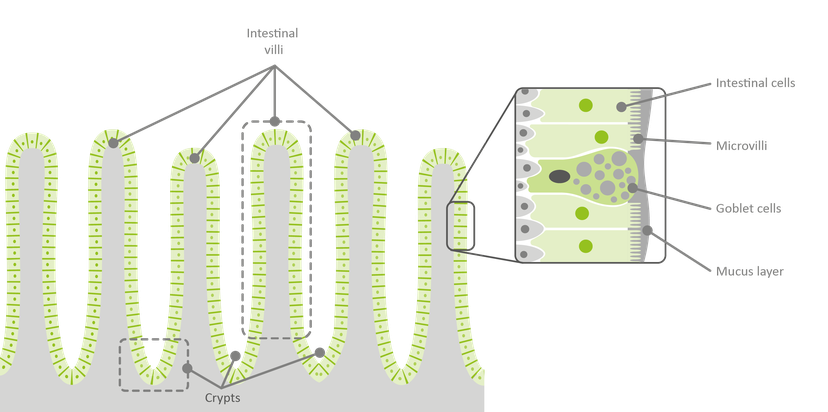 Figure 1: Structure of a healthy intestinal tract.
Villi and microvilli increase the surface area for nutrient absorption, with villi increasing it 40-fold and microvilli 600-fold. Villi are connected to blood vessels, allowing nutrients to be used throughout the body. Thus, the intestine is a key site for nutrient digestion and absorption and an animal’s growth and performance are linked to villus height.
The Barrier Function of the Gut.
The intestinal monolayer is also responsible for maintaining a strong barrier against toxins, antigens, and pathogenic microbes, preventing these substances from crossing into the body. It plays an important role in maintaining the homeostasis of the gut internal environment. This barrier can be broadly divided into three parts: a microbial barrier, a mucosal barrier, and an immunological barrier (Figure 2).
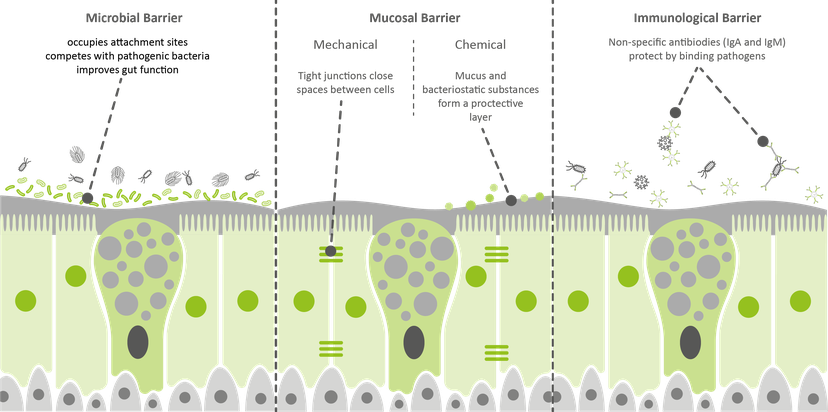 Figure 2: The intestinal monolayer maintains a strong barrier against toxins, antigens, and pathogenic microbes and is divided into three parts: a microbial barrier, a mucosal barrier, and an immunological barrier.
Piglets develop a diverse and complex microbial community in the gastrointestinal tract through milk consumption and exposure to the external environment. This dynamic balance between different beneficial gut microbiota constitutes the microbial barrier. The microbial barrier has three basic functions that provide a first line of defense against pathogens: 1) occupying binding and attachment sites; 2) competing with pathogenic bacteria for nutrients; and 3) improving gut function. The microbiota are frequently exposed to various antigens and microbial components from feed are particularly influenced by diet. Moreover, microbial changes can significantly impact animal growth and development.
The mucosal barrier is both mechanical and chemical. The mechanical barrier consists of healthy intestinal cells and tight junctions that close spaces between cells, controlling the movement of ions and small molecules from the gut to the bloodstream, filtering nutrients, electrolytes, and water. The chemical barrier includes mucus from goblet cells as well as bacteriostatic substances from non-pathogenic bacteria, which form a protective layer to prevent pathogenic bacteria from binding to intestinal cells.
Up to 70 % of immune cells are in the intestine, where innate and adaptive immunity work closely together to form the immunological barrier. The main method of defense is the production of secretory antibodies, primarily IgA and IgM. These non-specific antibodies protect by binding antigens near the intestinal surface or by neutralizing viruses and endotoxins within intestinal cells.
Two critical periods of maximum antigen exposure occur—one immediately after birth and one at weaning. During weaning, abrupt changes in diet and environment can alter the mucosal immune response. Understanding these interactions is essential for developing strategies to support healthy growth and development during these vulnerable periods.
Functional Changes During Weaning.
During weaning, piglets experience significant changes in their intestines due to abrupt shifts in diet and environment, greatly impacting piglet growth and development. Within 24 hours of weaning, villus height decreases by 75 %, usually from increased cell loss and/or decreased crypt cell production, resulting in the loss of mature intestinal cells and reduced nutrient absorption. Additionally, reduced activity of digestive enzymes such as lactase and peptidases and nutrient transporters have been correlated with shortened villus height.
The activity of digestive enzymes, including pepsin, trypsin, chymotrypsin, and amylase, undergoes a significant decline within one week of early weaning. This reduction of enzyme activity complicates feed digestion, resulting in reduced nutrient absorption, an accumulation of undigested nutrients in the intestine, and an overgrowth of potentially harmful bacteria. Weaning also causes compromised barrier function, which increases permeability and allows toxins, allergenic compounds, and bacteria to enter the body, triggering inflammatory responses.
The immune system in the intestine of pigs reaches an adult-like structure at around 7 weeks. As such, the weaning process also affects the immune response and the systemic development of innate and adaptive immunity. The withdrawal of milk and the introduction of new diets lead to up-regulated expression of pro-inflammatory cytokines and oxidative stress, further impairing intestinal function. Controlling intestinal inflammation processes and maintaining a normal oxidative state may alleviate subsequent intestinal disorders induced by weaning stress.
At weaning, the abrupt changes in the diet and environment induce changes in the intestinal microbiota, with a notable decrease in beneficial bacteria like Lactobacilli and a shift toward fiber-degrading bacteria. These changes in the composition and activity of the intestinal microbial community are often correlated with pathogenic infections during weaning, highlighting the importance of managing the weaning transition to support piglet health.
Nutritional Strategies: Dietary Feed Supplements.
One way to reduce weaning-associated intestinal dysfunction and impaired growth is through feed additives and nutritional supplements. Feed additives, including protein hydrolysates, emulsifiers, prebiotics, probiotics, feed enzymes, nucleotides, organic acids, phytogenic feed additives, colostrum, and toxin binders, are commonly used in weaned pig diets to promote growth and intestinal health.
Dietary supplements are on-farm strategies that take advantage of the synergistic effects of a combination of ingredients that can be administered quickly for targeted support. Some also have the advantage of being water soluble. This is especially helpful In cases where feed intake may be reduced.
Bimulac® Weaner and Bimulac® Pure are two feed supplements that are formulated with ingredients that have been well defined and researched to inhibit and bind pathogens and stimulate the immune system. Specifically tailored to the weaned piglet, Bimulac® Weaner and Bimulac® Pure combine TechnoSpore®—a unique spore-forming and lactic acid-producing probiotic—and TechnoMos®—a yeast cell wall prebiotic with a high content of mannan-oligosaccharides and β-glucans for the best synergy effects of these two ingredients.
Bimulac® Weaner also contains betaine to bring osmotic support, helping to stabilize the intestine around this critical phase. The addition of a fiber-rich polysaccharide to Bimulac® Pure increases the viscosity of the digestive tract, improving fecal consistency and nutrient absorption.
When a water application is needed, B.I.O.Zink SL and Rescue Kit® SL are two carefully formulated water soluble supplements. B.I.O.Zink SL is a balanced dietary feed supplement of organically bound trace elements in combination with essential vitamins and betaine whereas Rescue Kit® SL contains unique, highly effective probiotic strains, betaine, and a blend of organically bound trace minerals. These two supplements stimulate gut immunity and function and help to support healthy intestinal cells and minimize fecal water loss.
Don’t let weaning be a struggle for your piglets. Bimulac® Weaner and Bimulac® Pure, along with B.I.O.Zink SL and Rescue Kit® SL, offer targeted nutritional support to optimize gut health, boost immunity, and promote healthy growth during this critical transition. Contact us today to learn how our innovative solutions can help you navigate the weaning challenge and unlock the full potential of your piglets.


