Battling Mycotoxins: Unlocking Dairy Performance with B.I.O.Tox® Activ8
Mycotoxins are naturally occurring toxic secondary metabolites produced by fungi (molds) that can have a wide range of adverse effects, including liver and kidney toxicity, central nervous system effects, and estrogenic effects, to name just a few. Mycotoxins can contaminate a wide range of feed raw materials, compromising animal welfare, reducing animal performance, and affecting the sustainability and profitability of the entire value chain. The industry-important mycotoxins include aflatoxins, zearalenone, trichothecenes, fumonisins, ochratoxin A, and the ergot alkaloids.
Hidden Threats in Silage: Unveiling Mycotoxin Contamination
Mycotoxins occur in a range of livestock feeds, including concentrates, forages, hay, and silage. A survey of the global occurrence of mycotoxins found that 81 % of feed samples collected in the Americas, Europe, and Asia were positive for at least one mycotoxin.
A review of the literature shows that the contribution of silage, a major component of the dairy cow diet, to the total amount of mycotoxins ingested by cows can be significant. Indeed, silage was responsible for approximately 3 times more mycotoxin ingestion by dairy cows than other feed ingredients in a study of ensiled forages on 24 farms in the Netherlands.
DON in Dairy: The Silent Saboteur Affecting Herd Health
Deoxynivalenol (DON) is a Fusarium produced mycotoxin that is commonly detected in feed. It is also called vomitoxin as it is associated with vomiting in swine and dogs. Among the livestock species, ruminants appear to be less sensitive to the effects of DON because of ruminal microbial degradation.
However, additional metabolic burdens on ruminal microbes like concentrate-rich diets, faster rumen turnover rates, reduced pH, or high dietary DON levels, may restrict the ruminal detoxification capacity in high-yielding dairy cows. Under these conditions, DON exposure may cause problems comparable to those seen in monogastric animals.
The influence of (DON) on health and performance parameters of dairy cows has been widely reported. In short, DON shifts rumen microbial composition, alters rumen metabolism of unsaturated fatty acids and amino acids, and increases the risk of oxidative stress, inflammation, and reduced immune responses in dairy cows, leading to a wide range of symptoms such as decreased milk yield, altered milk quality, or an increase of metabolic and infectious diseases (Figure 1).
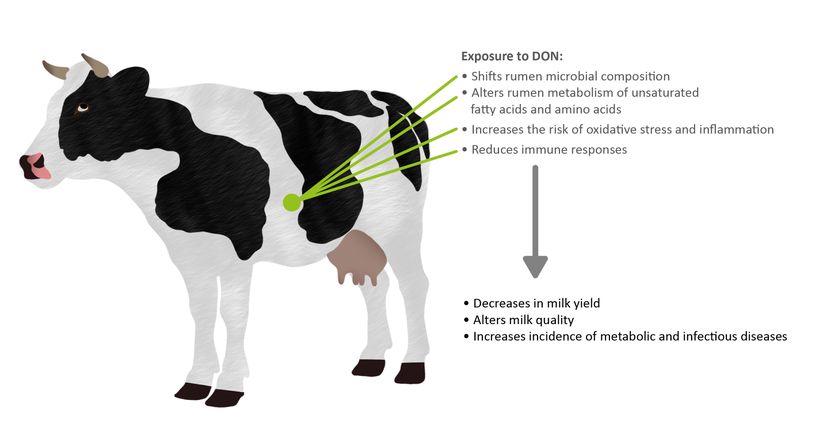 Figure 1: The effects of DON exposure to the health and productivity of dairy cows.
A survey of feed samples showed that DON is a common threat to livestock with a prevalence of 59 %. Another survey on the presence of mycotoxins in ensiled feed in the Netherlands found maize and wheat silage to be the main sources of DON in dairy cattle diets, and in Poland a multi-year mycotoxin survey found DON in 86 % of 143 maize silage samples.
These studies show, among other things, that DON is one of the most frequently detected mycotoxins in both feed and silage. As such, strategies aimed at preventing increased absorption of DON are essential for animal health and operational efficiency.
Comprehensive Mycotoxin Management: Beyond Simple Solutions
Comprehensive mycotoxin management is needed for effective mycotoxin control. This involves agricultural measures that should be considered before, during, and after the harvest. Toxin binders are another part of a complete toxin management strategy. Toxin binders are feed additives that can help to significantly reduce the bioavailability of mycotoxins. They work by irreversibly binding mycotoxins, allowing for excretion in the feces. Although the concept is simple, in practice, this becomes a bit more complex.
For one, the different mycotoxins vary considerably in their physical and chemical properties and a good binder surface must meet these criteria to be as effective as possible. Moreover, the binder must retain these properties under the widely varying pH changes along the gastrointestinal tract, which also can influence the surface structure of the toxin binder. In essence, the goal is a binding component that stably binds all relevant mycotoxins in the intestinal tract at all pH levels.
Field Trial Success Story: B.I.O.Tox® Activ8 Boosts Dairy Performance
The effectiveness of adding a toxin binder to the TMR was tested in a field trial on a German dairy farm with approximately 1,180 lactating cows. Farm production data showed a clear negative tendency from spring onwards, reaching a low point in June. Mycotoxins had been detected in the milk and in the TMR. Therefore, a toxin binder (B.I.O.Tox® Activ8) was added to the diet of lactating cows for a period of two months, during which milk mycotoxin levels, performance, and health parameters were monitored.
The trial was conducted in an on-off design from 8 July to 10 September. Lactating cows were fed diets corresponding to their stage of lactation (start or high yield) with B.I.O.Tox® Activ8 (20 g/head/day in the start group and 25 g/head/day in the high yield group) added as a premix to the TMR.
The TMR was analyzed for mycotoxins before the start of the study and at the end of the study. The test revealed the presence of DON and zearalenone (ZEA), indicating a continuous, natural contamination of these two mycotoxins during the trial period (Figure 2A, B).
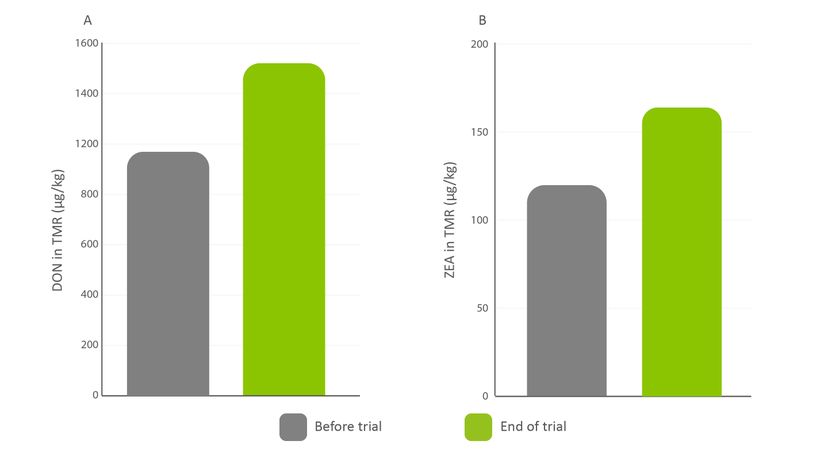 Figure 2: DON and ZEA contamination levels in the TMR before trial start and at the end of the trial.
Moreover, DON was noted in milk samples at a level of 70 µg/L before the start of the trial. The addition of B.I.O.Tox® Activ8 to the diet resulted in a stark reduction in DON milk levels at the end of the trial (70 µg/L to 17.3 µg/L; Figure 3). The clear reduction of DON-derivates in the milk in the face of constant mycotoxin contamination in the TMR underscores the efficiency of B.I.O.Tox® Activ8 in reducing DON’s bioavailability.
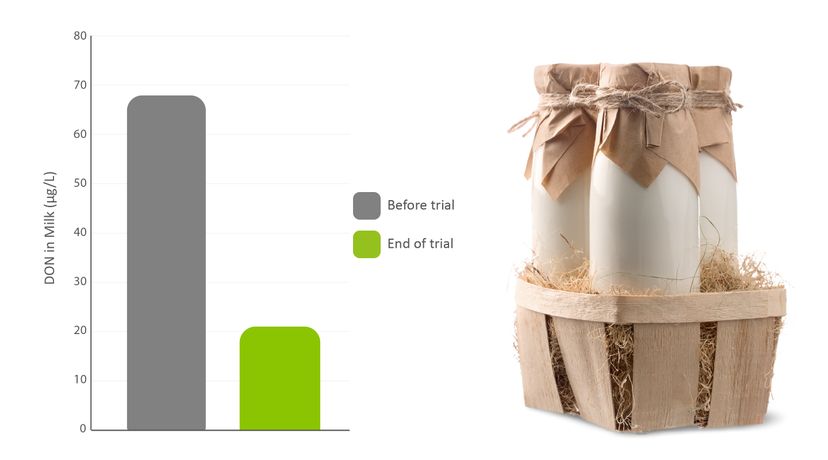 Figure 3: DON contamination levels in the milk before trial start and at the end of the trial.
Compared to the previous nine-month average, the June (pre-trial) milk yield was down 12.9 % (Figure 4A). In addition, milk fat in tank milk had decreased significantly in June compared to the previous month (Figure 4B). By the end of the trial, milk yield had increased by 8 % compared to June and milk fat in tank milk had increased dramatically to levels greater than before the trial (Figure 4B).
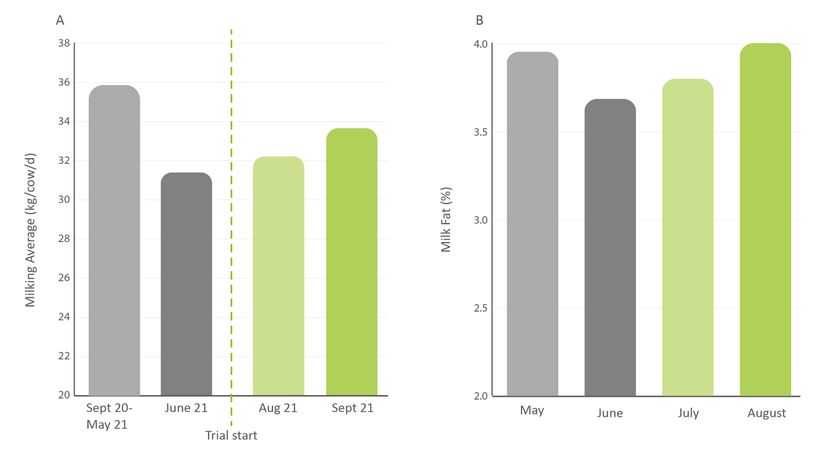 Figure 4: Official testing milking averages before and during the trial (A), Percentage milk fat in tank milk for the two months preceding the trial and during the trial (B).
In addition, compared to the preceding nine-month average, the SSC had increased from 328 (x 1000/mL) to 475 (x 1000/mL) in June. After the addition of B.I.O.Tox® Activ8 during the trial period, the SCC was reduced to near baseline levels of 390 (x 1000/mL) in September (data not shown). Blood serum measurements of liver enzymes showed improved liver health at the end of the trial (data not shown).
B.I.O.Tox® Activ8: Your Holistic Solution for Mycotoxin Control
B.I.O.Tox® Activ8’s supreme binding capabilities make it highly effective against all major mycotoxins, including aflatoxins, ochratoxins, zearalenone, T-2/HT2-toxin, DON, and fumonisins. However, B.I.O.Tox® Activ8 is more than just a mycotoxin binder; it also contains natural detoxifiers that support the liver’s antioxidative and detoxifying processes. B.I.O.Tox® Activ8 helps to prevent or counteract the damage caused by mycotoxins and improves overall performance.
B.I.O.Tox® Activ8 is a reliable and scientifically supported solution to mycotoxin contamination in animal feed. Its combination of supreme binding capabilities and natural detoxifiers makes it a holistic solution for improving animal health and performance as well as protecting human safety.
B.I.O.Tox® Activ8 is your solution for fast and efficient mycotoxin control!


