Biochem
Products
Biochem
gmp+

GMP+ (FSA)

Feed Safety

A Futter

A-Futter

Quality Management

EG OKO

EG-Öko

Organic Feed

QS Feed Safety

QS

Feed Safety

GMP+FRA

GMP+ (FRA)

Quality Management

ISO 50001

ISO 50001

Energy Management

ISO 9001

ISO 9001:2015

Quality Management

VLOG

VLOG

Quality Management

EvoVadis

EcoVadis

Sustainability

Let’s Connect:LinkedInFacebookYoutube

Links

  • About Us
  • Contact Us
  • FAQs
  • Environment and Safety
  • Whistleblower Platform
  • Modern Slavery Act Statement

Products

  • All Products
  • TechnoSpore®
  • B.I.O.Tox® Activ8
  • E.C.O.Trace® Iron
  • BetaTrace® Iron
  • LiquiTonic LC

Animal Species

  • Ruminants
  • Poultry
  • Swine
  • Aquaculture
  • Companions

Legal

  • Imprint
  • Privacy Policy
  • Terms & Conditions

© 2025, Biochem Zusatzstoffe Handels- und Produktionsgesellschaft mbH

  • ImprintPrivacy PolicyTerms & Conditions
  1. Home
  2. News
  3. Articles
  4. Colostrum, mother nature’s strong choice – and why it’s worth to follow

Colostrum, mother nature’s strong choice – and why it’s worth to follow

Published on: July 10, 2020
Author: Biochem Team
Time: 5 min read
Share on:
Loading article content for text-to-speech...

Calves, piglets, goat kids, lambs and foals are born with an immature immune system and an agammaglobulinemia. Consequently, new-borns are prone to infectious diseases (e.g. respiratory tract diseases and diarrhea) after birth. Colostrum, the first nursed mammary secretion, is life-essential directly after birth and a real superfood for the offspring. It provides passive immunity (e.g., immunoglobulins, leucocytes), nutrients and more than 50 known bioactive substances for an optimal start in the extra-uterine life. 

Passive transfer of immunity.

Immunoglobulins (Ig), also known as antibodies, are y-shaped glycoproteins of the adaptive immune system, which target highly specific pathogen patterns in a key-lock mechanism. After immunoglobulins have attached to the pathogen, they alert other immune components to eliminate the invading pathogen. In the mammalian immune system, 5 different immunoglobulin classes appear: IgA, IgD, IgE, IgM and IgD. 70 – 80 % of the total protein content of colostrum are immunoglobulins, from which are 85 - 90 % IgG and 10 % IgA, IgM.

The placenta, a semi-permeable barrier, prevents the transmission of immunoglobulins from the dam to the fetus. Therefore, the intake of immunoglobulins through the colostrum, called passive immunisation, is essential to protect the offspring against invading pathogens until the own immune system has developed. In contrast, active immunization is the qualification of own immune cells and antibodies as a response to a survived infection or vaccination.

During the first 24 – 36 hours after birth, immunoglobulins are transferred through the new-borns’ enterocytes from the intestinal lumen to the bloodstream by an unspecific receptor-mediated mechanism. The amount as well as the time of colostrum intake correlates strongly to the serum IgG concentration and consequently to disease susceptibility (Fig. 1a): the higher the serum IgG level, the lower the disease incidences, morbidity and mortality rates (Fig 1b).
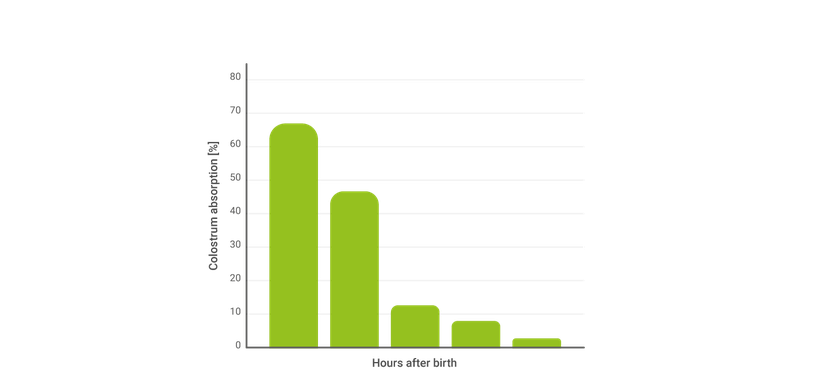
Figure 1: (a) Early colostrum intake gained better immunoglobulin absorption.
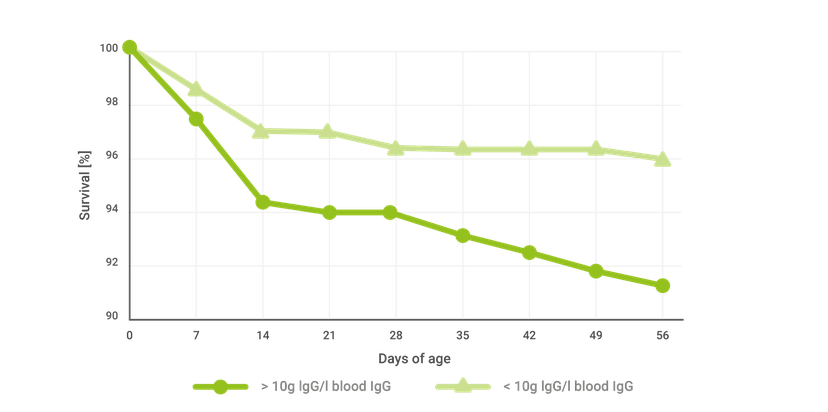
Figure 1: (b) Calf survival is positively correlated with immunoglobulin level.

Colostrum—a magical milk.

Compared to mature milk, colostrum does not only provide passive immunity but also delivers highly concentrated ingredients for the development of various organs including the immune- and gastrointestinal system. Besides the mentioned immune factors (e.g. immunoglobulins, leucocytes) the antimicrobial substances like lactoferrin, lactoperoxidase and lysozyme are the first line of defense against invading pathogens. These enzymes inhibit growth and kill microbial species (e.g. bacteria, viruses) and infected cells. Moreover, growth factors, above all IGF-I, IGF-II and EGF, and prebiotic active components (e.g. milk oligosaccharides) support cell proliferation, differentiation and protein synthesis in the gut. Sufficient and early colostrum supply promotes nutrient uptake, results in longer villi and a better repair rate of damaged intestinal cells.

For an energetic start in life and to facilitate the drastic change from intra-uterine to extra-uterine diet, colostrum contains high nutritionally valuable ingredients (fat, proteins, vitamins A, D, E and B). Fat and lactose are essential energy sources for the thermoregulation and body temperature, not only in “high risk” calves and small ruminants.

Colostrum management.

Even in good managed dairy and beef farms 15 – 40 % of calves in North America, Australia and Europe are diagnosed with failure of the passive transfer due to poor colostrum management. To obtain an adequate immune status (> 10 g/l IgG and > 5 g total serum protein) calves must acquire 4 litres of good quality colostrum (> 50 g/l IgG) within the first 6 hours after birth (Fig. 1a). Either a second colostrum feeding at the latest 12 hours and colostrum consumption in the first days of life shows beneficial long-term effects on health and productivity.

Not only the colostrum quality and intake but also a high hygiene standard is important for a successful passive immune transfer. It is not always possible to provide maternal or farm’s own colostrum of high quality. In such cases colostrum replacers or supplements are applicable. Such bottlenecks are low quality or low quantity of maternal colostrum, prevention of disease transmission (e.g. Johne’s disease, infectious diarrhea), high-risk neonates (weakness, small ruminants, cold/wet/windy weather, difficult birth, twins) and when it is questionable whether a calf has consumed a full dose of colostrum.

Colostrum powder—a nature borne concept, not only an Ig donor.

To improve colostrum management and calf health B.I.O.Ig, a pure bovine colostrum powder, produced from high-quality first-day colostrum, is used against the failure of passive transfer. It contains a standardised content of 15 %, 20 % or 30 % immunoglobulins against a wide spectrum of diseases. During the manufacturing process colostrum for 20 % and 30 % product is skimmed, whereas no separation is necessary for the 15 % product. Natural immunological active and bioactive substances are preserved to ensure multiple support for young animals’ development:

  • Strengthens passive immunity

  • Supports the development of the immune system

  • Broad support of local immunity

  • Improves the development and regeneration of intestinal cells

  • Laxative effect

The efficiency of B.I.O.Ig as colostrum replacer in ensuring a successful passive immunization was tested in calves and goat kids without using maternal colostrum. In all trials, good absorption rates result in the adequate immune status of the animals. But B.I.O.Ig has more benefits than only the effective transfer of passive and local immunity:

  • Safe: free of Johne’s disease, Salmonella, Bovine Leukosis virus, Brucellosis, foot-and-mouth disease

  • B.I.O.Ig is free from IBR-causing BHV1-field virus and antibodies against BHV1-field virus

  • Natural full colostrum – No additional or artificial components (e.g. plasma, whey)

Conclusion.

Good colostrum management is a rewarding investment in the future of young animals, as optimal nutrient and immune supply right from the beginning assures a good development. B.I.O.Ig, a natural bovine colostrum powder with a high immunoglobulin content, can replace or supplement the maternal colostrum in difficult situations.

More Articles

Understanding the World Through Our Pets’ Eyes

Understanding the World Through Our Pets’ Eyes

Modern life can be as stressful for our pets as it is for us. From sudden thunderstorms to small changes in daily routines, cats and dogs often need a little extra support to feel at ease. Discover how a natural, gentle approach to emotional balance can help your pet stay "Naturally Grounded" and "Gently Balanced" every day.

Share on:
The Billion-Dollar Stress Problem You Can’t Cool Away

The Billion-Dollar Stress Problem You Can’t Cool Away

As temperatures rise and metabolic pressure builds, the economic consequences for dairy operations begin well before losses become visible in the milk tank. Discover why a multi-factorial approach to stress resilience is the most effective investment you can make — for every season, every cycle, every cow.

Share on:
How to Reliably Prove the Efficacy of a Toxin Binder

How to Reliably Prove the Efficacy of a Toxin Binder

How do you know if your mycotoxin binder actually works when inside the animal? Discover our validated evaluation method that connects precise laboratory gastrointestinal simulation with multi-toxin in vivo performance trial benchmarks.

Share on:
Feed Intake First – The Top Priority.

Feed Intake First – The Top Priority.

The weaning transition is a critical window for piglet development. When feed intake drops, gut integrity follows, creating a cycle of poor performance. Our latest research explores how the umami-rich profile of Kluyveromyces fragilis provides a stable, natural foundation to maintain appetite and support immunity during this high-stress period.

Share on:
Securing the Future of Dairy Performance with Rumen Bypass Betaine.

BetaTrace®: Securing the Future of Dairy Performance with Rumen Bypass Betaine.

Standard betaine is often lost to rumen degradation, limiting its ability to support transition cows when they need it most. BetaTrace® overcomes this challenge by complexing betaine with organic trace minerals, allowing it to bypass the rumen and effectively support liver health and metabolism. Discover how this dual-action additive increases methionine availability and boosts lactation performance while delivering essential minerals.

Share on:
Managing Mycotoxins: Real Stories, Real Solutions.

Managing Mycotoxins: Real Stories, Real Solutions.

When a pig farmer faced unexplained herd instability in his sows, standard zeolite binders failed to provide a solution. Read how switching to B.I.O.Tox® Activ8 restored reproductive performance and improved weaned piglet numbers in a decisive six-month field trial.

Share on:
Time to Rethink Weaning: Why Smarter Strategies Deliver Stronger Biological and Economic Outcomes in Dairy Calves.

Time to Rethink Weaning: Why Smarter Strategies Deliver Stronger Biological and Economic Outcomes in Dairy Calves.

Viewing heifer rearing merely as a cost center overlooks its potential as a massive investment in your herd's future productivity. The weaning phase is particularly critical; mistakes here can undo early gains and permanently reduce lifetime milk yields. Discover how to smoothen weaning and protect your investment with RumiPro® Wean.

Share on:
Day-Old Chick Quality: Why is it an important topic?

Day-Old Chick Quality: Why is it an important topic?

Discover why the quality of day-old chicks has become the make-or-break factor in today's volatile poultry market. Learn how the first hours after hatching can determine the performance potential of your entire flock, and why leading producers are implementing specialized early support protocols. Unlock science-backed strategies that can dramatically improve your day-old chick (DOC) quality and profitability.

Share on:
Managing Large Litters

Managing Large Litters.

Breeding progress has delivered bigger litters—but not without costs. Sow breeding goals have changed over the past few decades with a focus on selecting higher ovulation rates and large litter sizes. Not only does this place increased demand and pressure on sows, but large litters increase birth weight variabilityt, competition at the udder, and pre-weaning losses. This newsletter explains practical, science-based ways to support sow health, colostrum and milk supply, and early piglet care. You’ll also see how water-based delivery and farm-individual feeding concepts can boost uniformity and weaning success.

Share on:
TechnoSpore® in Broilers: A Meta-Analysis.

TechnoSpore® in Broilers: A Meta-Analysis.

Modern broiler production faces unique challenges due to rapid growth and high disease susceptibility. Discover how TechnoSpore®, a probiotic based on Bacillus coagulans DSM 32016, enhances production efficiency by improving gut health and feed digestibility. Backed by extensive studies involving over 3 million birds, TechnoSpore® delivers measurable results that can significantly improve your flock's performance.

Share on:
Mycotoxins: A Pervasive Challenge.

Mycotoxins: A Pervasive Challenge.

Mycotoxins pose a silent, yet pervasive threat to animal feed and livestock health worldwide. Discover how these hidden dangers develop, why multi-contamination is a growing concern, and the advanced methods crucial for accurate detection. Learn how Biochem faces these challenges. Discover what is possible with mycotoxin analysis including tailored strategies to protect animal welfare and profitability.

Share on:
Rethinking Trace Minerals: Healthier Shrimp, Cleaner Planet with E.C.O.Trace®.

Rethinking Trace Minerals: Healthier Shrimp, Cleaner Planet with E.C.O.Trace®.

Trace minerals are vital for your animals’ peak performance, but how can we ensure their optimal intake without harming our planet? Traditional supplementation can lead to significant mineral waste and environmental concerns. Discover how E.C.O.Trace® organic trace minerals offer a smarter solution, enhancing absorption to deliver better shrimp health with less environmental impact. It’s time to achieve more with less for a sustainable future in shrimp nutrition.

Share on:

Subscribe to our Newsletter.

Stay in the loop! Get educational insights and product news delivered right to your inbox. Sign up for our quarterly newsletter today!