Give Your Birds a Breathing Chance!
The bird has evolved an extraordinary respiratory system—one that can maintain a constant supply of oxygen to the muscles during flight and provide enough oxygen to sing at the same time. A bird’s respiratory system takes up about 20% of its internal volume, similar to another animal with a huge oxygen demand—the horse. In contrast, the human respiratory system occupies about 5% of its internal volume. Despite the evolutionary advantages, there can be disadvantages that, if not addressed, can result in decreased health and performance.
One of a Kind: The Unique Avian Respiratory System.
The avian respiratory system is structurally and functionally unique among air-breathing vertebrates. Unlike the reciprocating mammalian respiratory system, which terminates in large alveolar air spaces, the avian lung is a unidirectional, flow-through system that terminates in small air capillaries.
The avian respiratory system consists of two lungs where gas exchange occurs and several air sacs that serve as mechanical ventilators. The avian bronchus is a branching, three-tiered system that gives rise to primary and secondary bronchi and tertiary parabronchi. This means that the trachea divides into primary bronchi, each of which passes through the lungs and ends in the abdominal air sacs. Secondary bronchi arise from the primary bronchi in the lungs and supply air to the other air sacs (Figure 1).
The parabronchi form an intricate system of branching and interlacing thin-walled air capillaries surrounded by exchange tissue. The structure of this tissue is such that the blood capillaries are exposed to air on all sides, greatly increasing the surface area available for gas exchange. In contrast, mammalian alveolar blood capillaries are exposed to air on only two sides. This makes the avian gas exchange system highly efficient.
Air sacs make up the largest volume of the avian respiratory system. They serve to facilitate the continuous flow of large volumes of air through the lungs, thereby increasing efficiency. A key difference in the avian respiratory system is that respiration is unidirectional. This means that it takes two complete cycles (two inhalations and two exhalations) to move a given volume of oxygen-rich air through the lung and air sac system. The one direct inhalation and exhalation cycle of mammals may seem simpler, but this system is unable to maintain a constant volume of air.
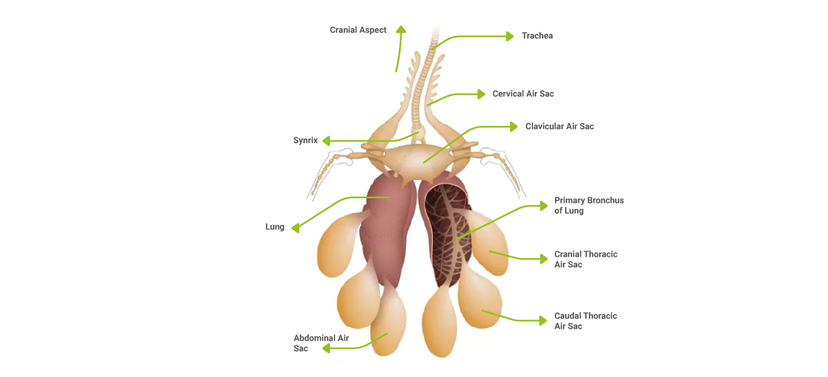 Figure 1: Anatomy of the bird’s respiratory system.
What does this mean for the bird?
Taking into account the blood-gas barrier, respiratory surface area, lung volume, and pulmonary blood capillary volume, the avian lung allows for a significant increase in efficiency compared to the mammalian lung. This increased efficiency may translate into optimized physiological performance through increased oxygen exchange. However, the unique structure of the avian respiratory system means that care must be taken to maintain health and performance.
There are several factors in poultry management that can affect the health of the bird’s respiratory system. First and foremost is bird management. Zoohygiene, environmental and climatic conditions, ventilation, stocking density, and housing type all play an important role in the “quality” of the available air. In addition, exposure to pathogens plays a critical role.
From the nasal associated lymphoid tissues to the bronchial associated lymphoid tissues, the respiratory tract is the bird’s first line of defense against pathogens. There are several common respiratory pathogens—both bacterial and viral—that challenge birds at different ages.
Several avian viruses can cause, among other clinical signs, airway obstruction, which often leads to decreased performance, morbidity, and ultimately death. In addition, there are numerous common bacteria and non-specific pathogens that directly or indirectly affect a bird’s respiratory system, adding to a complex problem (Figure 2).
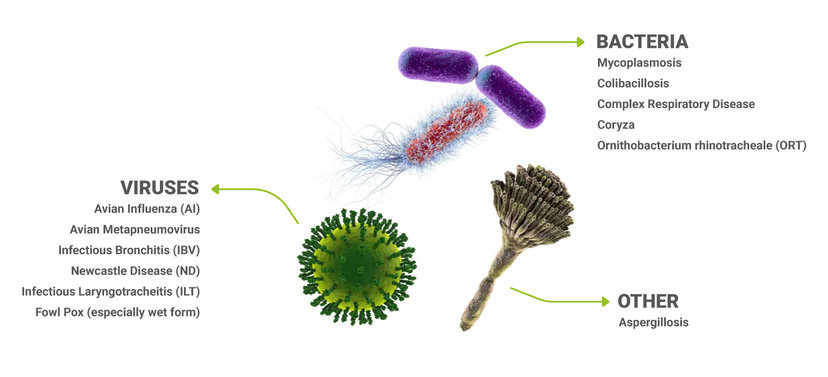 Figure 2: Examples of common respiratory pathogens. Respiratory pathogens like viruses often cause respiratory airway obstruction in birds. Several of these viral, bacterial, and other pathogens may cause difficulty in breathing in the birds, and directly or indirectly affect the bird’s respiratory system and can be part of a complex problem.
What does this mean for the farmer?
Animals with compromised respiratory systems have low blood oxygen levels, leading to discomfort, reduced vitality, and decreased feed intake. Ultimately, this leads to reduced performance and even increased mortality rates. In addition to the economic losses caused by reduced flock performance due to respiratory problems, the above-mentioned diseases also result in additional costs for the farmer that affect the bottom line.
With the goal of avoiding the manifestation of larger complex problems, these additional expenses typically include costs associated with:
improved biosecurity and sanitation
vaccination programs
medical treatments
In addition, certain diseases where prevention has been unsuccessful may require the culling of the entire flock, resulting in a significant financial loss to the farmer. In places where compensation for lost flocks is not available, this can be ruinous for farmers. Therefore, preventive measures are of paramount importance.
Signs That All Is Not Right.
Routine inspection of several metrics of the flock can help determine if something is not well with the birds. These data points can include:
age
vaccination status
previous medicinal treatments
mortality
weight gain
laying rate
hatchability
feed and water intake
Behavioral signs—specifically activity level, attentiveness, perching behavior, huddling, and posture—are also important to take note of and can provide many clues to the health of the flock. When considering the clinical signs that are evident in a flock with respiratory problems, we can categorize these into what we can hear and see.
What we see…
A very common sign is an open beak, indicating that the bird is panting. This may be due to thermal stress (trying to cool down) or trying to clear its airways of possible mucus. The nostrils and sinuses often show signs of swelling and some kind of discharge, and the eyes may show signs of conjunctivitis, or they may be foamy and/or sunken (Figure 3). The comb and wattle may be visibly swollen and discolored. The bird’s posture can tell a lot, especially if the feathers appear to be ruffled, the wings drooping, and the bird is hunched over, moribund.
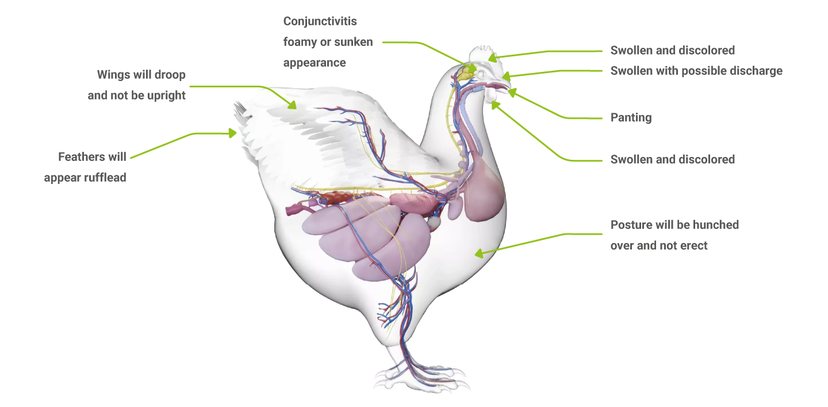 Figure 3: Where to look for signs that a bird has a respiratory problem.
What we hear…
Attentive ears will normally pick up irregular sounds in a flock, like, for example, sniveling. This sound is usually associated with a mild inflammation typically associated with viral infections, although it can sometimes occur with vaccination reactions. When birds are heard sniffing and grunting, this often indicates more irritated mucous membranes in the upper respiratory tract, often associated with signs of conjunctivitis.
Tracheal rales and honking are clinical signs that we can hear with both viral and bacterial infections, especially with IBV, ND, and colibacillosis infections. These signs are a clear indication of excess mucus, mucus in the nasal cavity, and tracheal inflammation. It should be noted, though, that all these clinical signs can also be heard when the house’s climate and environment are not satisfactory.
On the other hand, shrieking, gasping, wheezing, and coughing are signs of critical respiratory disease and are typically associated with Infectious Bronchitis (IBV), Newcastle Disease (ND), Infectious Laryngotracheitis (ILT), Avian Influenza (AI), and colibacillosis. These birds have severely inflamed airways with thick mucus and are in danger of suffocating.
How Can We Deal with Respiratory Problems?
For most avian respiratory diseases, the best prevention methods are vaccination and biosecurity. In fact, vaccination is required by law in some countries for certain diseases such as ND and IBV. Outbreaks of ND are considered serious because of their potential to be velogenic, characterized by rapid spread and up to 100% mortality.
There is currently a global focus on AI and how best to manage this disease. Preventive treatment in the form of vaccination is not yet standard, so biosecurity and good farm hygiene play a fundamental role, as the virus is highly contagious, easily spread and is not only highly pathogenic to many bird species but some strains can also spread to the human population.
While good biosecurity and farm management are the basic tools to prevent major respiratory problems, antibiotics remain a necessary tool to manage pathogenic pressures on farms that threaten animal welfare, reduce performance, and promote diseases that are harmful to animals and, ultimately, humans.
Phytogenic Additives Can Help.
Despite their usefulness, the use—or overuse—of antibiotics in the industry has come under scrutiny. Alternatives to antibiotics have become increasingly important, and the use of phytogenic feed additives as adjuncts to conventional methods is one area that shows promise. This is reflected in the increased research into the efficacy of phytogenic compounds. There are many scientific studies demonstrating the various beneficial effects on poultry.
The use of phytogenics during respiratory challenges in poultry has beneficial effects. Both in combination with conventional treatments or as a preventive aid, they can help alleviate respiratory signs and facilitate breathing, providing comfort and improved well-being.
Some phytogenic additives can help thin mucus, making it easier to clear from the airways. In addition, these phytogenic additives, with their antispasmodic and expectorant properties, facilitate airway clearance and breathing during infection.
Other phytogenic compounds are known for their cooling properties. These compounds activate certain cold receptors on mucus membranes, creating a cooling effect and promoting the feeling of easier air intake. Birds benefit from this effect not only when they are congested, but also in situations where there are large temperature fluctuations.
Phytogenic Dietary Feed Supplements in Action.
The supportive effects of BronchoVest, a phytogenic dietary supplement, on respiratory signs were investigated in a controlled trial with Ross308 broilers. Birds (n=384) were assigned to one of six groups (T0–T5). All birds were vaccinated against ND at the hatchery and with La Sota strain via drinking water on day 15. Specific groups were challenged intratracheally with a pathogenic field isolate of E. coli on day 22. BronchoVest was administered either via the drinking water or as a spray application after vaccination and challenge treatment period. All birds were monitored, pen-wise, for clinical signs four times per day for up to seven days post challenge. The following respiratory signs were observed: head swelling, nasal discharge, sneezing, coughing, and dyspnea. Each clinical sign was scored on a scale of 0 (no sign) to 3 (severe).
The groups of challenged birds supplemented with BronchoVest had decreasing respiratory signs over the supplementation period compared to the birds in the T1 positive control group (Figure 4). At the end of the monitoring period, the supplemented groups were similar to the unchallenged groups, in contrast to the positive control group. These trial results clearly demonstrated the ability of phytogenic supplements such as BronchoVest to help reduce respiratory signs in at-risk birds.
 Figure 4: Daily average clinical scores post E. coli challenge. T0: negative control; T1: positive control; T2: Unchallenged treated via drinking water; T3: Unchallenged treated via spray; T4: Challenged treated via drinking water; T5 Challenged treated via spray.
BronchoVest combines the synergistic effects of several active phytogenic ingredients to help birds with respiratory signs. This is particularly helpful in cases of viral respiratory disease where the immune system is challenged and damaged mucous membranes are susceptible to bacterial infection. BronchoVest is a flexible and easy-to-use tool for farmers to improve bird health and performance by addressing respiratory issues.


