Biochem
Products
Biochem
gmp+

GMP+ (FSA)

Feed Safety

A Futter

A-Futter

Quality Management

EG OKO

EG-Öko

Organic Feed

QS Feed Safety

QS

Feed Safety

GMP+FRA

GMP+ (FRA)

Quality Management

ISO 50001

ISO 50001

Energy Management

ISO 9001

ISO 9001:2015

Quality Management

VLOG

VLOG

Quality Management

EcoVadis

EcoVadis

Sustainability

Let’s Connect:LinkedInFacebookYoutube

Links

  • About Us
  • Contact Us
  • FAQs
  • Environment and Safety
  • Whistleblower Platform
  • Modern Slavery Act Statement

Products

  • All Products
  • TechnoSpore®
  • B.I.O.Tox® Activ8
  • E.C.O.Trace® Iron
  • BetaTrace® Iron
  • LiquiTonic LC

Animal Species

  • Ruminants
  • Poultry
  • Swine
  • Aquaculture
  • Companions

Legal

  • Imprint
  • Privacy Policy
  • Terms & Conditions

© 2025, Biochem Zusatzstoffe Handels- und Produktionsgesellschaft mbH

  • ImprintPrivacy PolicyTerms & Conditions
  1. Home
  2. News
  3. Articles
  4. A Breath of Fresh Air: Tackling Swine Respiratory Disease

A Breath of Fresh Air: Tackling Swine Respiratory Disease

Publicado em: June 22, 2023
Autor: Biochem Team
Hora: 6 min read
Compartilhar no:
Loading article content for text-to-speech...

Respiratory disease continues to be a major economic and health problem in the swine industry worldwide. Respiratory diseases in pigs are common and can cause significant economic losses due to reduced growth, feed efficiency, and damage to the respiratory tract. Respiratory dysfunction affects animal welfare and often leads to increased antibiotic use.

The Pervasive Problem of Respiratory Diseases.

Respiratory diseases can occur at any stage of production but appear more frequently and severely in young pigs (≤6 months of age), especially in intensive systems with high stocking densities and poor ventilation. In fact, porcine respiratory disease has been recognized as a major pathogen-identified cause of mortality in pigs, accounting for approximately 47 % of the deaths in nursery pigs and 75 % in grown-finishing pigs.1

A variety of pathogens can cause respiratory disease in pigs, including bacteria, viruses, parasites, and fungi. Often, more than one pathogen can infect the respiratory system at the same time, resulting in a complex and severe disease. In addition, the incidence of respiratory disease in pigs is influenced by many factors, including environmental, farm and animal factors.

Studies of the associations between respiratory disease and farm factors have shown that housing characteristics, such as natural ventilation and lack of disinfection, can increase the risk of respiratory disease. Extreme temperatures, humidity, and air quality can make pigs more susceptible to infection. Sudden temperature changes can cause thermal stress and inflammation in pigs’ respiratory systems, predisposing them to infection. In addition, changing weather patterns can alter the distribution and transmission of respiratory pathogens and vectors.

Age, genetics, health status, and immunity of pigs can influence their resistance or susceptibility to respiratory disease. Pigs with underlying disease or nutritional deficiencies may have compromised immunity and be at increased risk. With respect to young piglets with their immature passive immunity after birth, the health, and immune status of the sow and the quality of the colostrum, time, and quantity of intake can play an important role in susceptibility to respiratory disease. Pigs with underlying nutritional deficiencies may also have impaired immunity and increased risk of respiratory disease.

Wheezing and Sneezing.

The symptoms of respiratory disease in pigs vary depending on the type, severity, and duration of infection and may be manifested by overt clinical signs and mortality or may be subclinical, with adverse effects only apparent through poor performance. Previous studies have examined the relationship between respiratory disease and production traits and found that an increased prevalence of respiratory disease was associated with poorer on-farm performance measures of mortality, deadweight, back fat, and carcass weight.

One challenge in detecting respiratory disease in pigs is that symptoms are often subtle or non-specific. Pigs may show signs of coughing, sneezing, nasal discharge, labored breathing, decreased appetite, or lethargy. However, these signs may be caused by other factors, such as stress, environmental conditions, parasites, or nutritional deficiencies. Another challenge is that obvious signs—such as coughing and sneezing—may not appear until the disease has progressed to a severe stage.

The severity and economic impact of respiratory disease is related to stocking density and the type and size of a herd. Although mortality is usually low, economic losses result from a negative effect on growth rate, reduced feed efficiency and additional treatment costs. Respiratory disease can negatively affect production traits, such as average daily gain and carcass weight. In addition, the extended fattening period results in a higher proportion of light pigs at slaughter.

Management Solutions.

On-farm biosecurity is the first line of defense in preventing the introduction and spread of infectious agents among pigs. This critical step includes measures such as quarantine, isolation, disinfection, vaccination, and testing, and lays the foundation for a healthy and disease-free herd. Regular surveillance to identify unwell pigs and provide timely and effective treatment also plays a critical role in maintaining the overall health of a pig farm.

Providing pigs with the right nutrition is essential and includes providing feeds that meet the nutritional needs of pigs at different stages of production and are contaminant-free. Fuel for optimal health and performance—a well-nourished pig is better equipped to resist disease and reach its full productive potential.

The environment in which pigs live can dramatically affect their well-being. Effective environmental management includes providing adequate space, ventilation, temperature, humidity, lighting, and bedding. Providing optimal comfort while maintaining hygiene can significantly reduce stress and the risk of spreading disease among pigs.

Peppermint oil, Eucalyptus oil, and Menthol: A Winning Combination.

Essential oils have been used for centuries and are known for their antimicrobial, anti-inflammatory, and immune-boosting properties. For respiratory health, these natural compounds can provide relief. BronchoVest contains a carefully formulated blend of peppermint and eucalyptus oils, along with menthol, to provide targeted support for respiratory health in pigs.
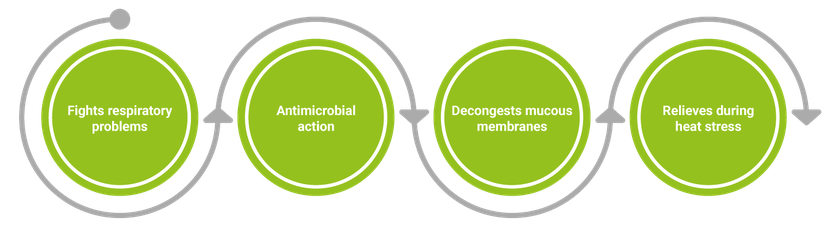
Figure 1: The administration of BronchoVest can have the following supportive effects.Figure 1: The administration of BronchoVest can have the following supportive effects.

Eucalyptus oil helps to improve lung function. It restores the natural activity of the respiratory epithelium and removes mucus from the bronchial tubes. The main component of eucalyptus—1,8-cineol—can be absorbed through inhalation and through the gastrointestinal tract, showing antimicrobial activity against a wide range of pathogens.

Natural peppermint oil acts as a bronchodilator, reducing mucus production and increasing airflow to the lungs. Peppermint oil can also relieve pain and stress and improve breathing in affected pigs. Menthol crystals from Mentha piperita have extraordinary effects. Menthol binds to sensory receptors that are activated by cold temperatures, which are expressed in the lungs and other organs. In the skin, this activation has a cooling effect, but in the nasal receptors, the effect is easier breathing, reduced swelling, and an overall effect of reduced mucous membrane irritation.

Breathe Easy with BronchoVest.

With its high content of active essential oils—including active eucalyptol (1,8-cineol)—BronchoVest has been shown in vitro to have antimicrobial activity against several pathogens. BronchoVest is a water-based formulation. This means that it is free of alcohol and does not leave any oily residue. As such, BronchoVest is suitable for use in drinking water.

Don’t let respiratory diseases catch you off guard—BronchoVest provides a natural, non-invasive method to ensure that your pigs breathe easy.


1 Pirolo M, Espinosa-Gongora C, Bogaert D, Guardabassi L. The porcine respiratory microbiome: recent insights and future challenges. Animal Microbiome. 2021;3(1).

More Articles

Unlocking Mineral Efficiency in Poultry with BetaTrace®

BetaTrace®: Maior eficiência dos microminerais na avicultura

Descubra como microminerais quelatados à betaína podem contribuir para o desempenho das aves, a mineralização óssea, a qualidade da casca dos ovos e a defesa antioxidante por meio de uma suplementação mineral otimizada.

Share on:
EU Mycotoxin Guidance Values Tighten - How Feed Manufacturers Can Prepare for 2027

Valores de referência da UE para micotoxinas ficam mais rigo-rosos: como os fabricantes de rações podem se preparar para 2027

Novos valores de referência da UE para micotoxinas serão aplicáveis a partir de 2027. Saiba como as empresas do setor de alimentação animal podem se preparar com análises direcionadas e um manejo eficaz de micotoxinas.

Share on:
Productive resilience in modern poultry production - Thriving under stress

Resiliência produtiva na avicultura moderna: prosperando sob estresse

Estressores da produção, como calor, vacinação e manejo, desencadeiam respostas fisiológicas que desviam energia do crescimento. Descubra como uma estratégia nutricional estruturada e adaptada a cada fase pode ajudar a manter a integridade intestinal, apoiar a função hepática e preservar o desempenho do lote.

Share on:
Understanding the World Through Our Pets’ Eyes

Entendendo o mundo através dos olhos dos nossos animais de estimação

A vida moderna pode ser tão estressante para nós quanto para nossos animais de estimação. De tempestades repentinas a pequenas mudanças nas rotinas diárias, cães e gatos frequentemente precisam de um apoio extra para se sentirem seguros e tranquilos. Descubra como uma abordagem natural e suave para o equilíbrio emocional pode ajudar seu animal de estimação a permanecer “Naturalmente Estável” e “Suavemente Equilibrado” todos os dias.

Share on:
The Billion-Dollar Stress Problem You Can’t Cool Away

O problema bilionário do estresse térmico que não se resolve apenas com resfriamento

À medida que as temperaturas sobem e a pressão metabólica se acumula, as consequências econômicas para as operações leiteiras começam muito antes de as perdas se tornarem visíveis no tanque de leite. Descubra por que uma abordagem multifatorial para a resiliência ao estresse é o investimento mais eficaz que você pode fazer — para cada estação, cada ciclo, cada vaca.

Share on:
How to Reliably Prove the Efficacy of a Toxin Binder

Como comprovar a eficácia de um adsorvente de micotoxinas com segurança?

Como saber se o seu adsorvente de micotoxinas realmente funciona no organismo do animal? Descubra nosso método de avaliação validado que conecta uma simulação gastrointestinal precisa em laboratório com dados de referência de testes de desempenho in vivo multimicotoxinas em frangos de corte.

Share on:
Feed Intake First – The Top Priority.

Consumo de Ração Primeiro – A Prioridade Máxima.

The weaning transition is a critical window for piglet development. When feed intake drops, gut integrity follows, creating a cycle of poor performance. Our latest research explores how the umami-rich profile of Kluyveromyces fragilis provides a stable, natural foundation to maintain appetite and support immunity during this high-stress period.

Share on:
Securing the Future of Dairy Performance with Rumen Bypass Betaine.

BetaTrace®: Garantindo o futuro do desempenho leiteiro com betaína que contorna o rúmen.

A betaína padrão é frequentemente perdida devido à degradação no rúmen, limitando sua capacidade de apoiar as vacas em transição quando elas mais precisam. BetaTrace® supera esse desafio ao complexar a betaína com minerais orgânicos, permitindo que ela contorne o rúmen e apoie efetivamente a saúde e o metabolismo do fígado. Descubra como esse aditivo de dupla ação aumenta a disponibilidade de metionina e melhora o desempenho da lactação, ao mesmo tempo em que fornece minerais essenciais.

Share on:
Managing Mycotoxins: Real Stories, Real Solutions.

Gerenciando micotoxinas: histórias reais, soluções reais.

Quando um suinocultor enfrentou uma instabilidade inexplicável em seu rebanho de matrizes. Os adsorventes comuns a base de zeolita não solucionaram o problema. Leia como a mudança para B.I.O.Tox® Activ8 restaurou o desempenho reprodutivo e melhorou o número de leitões desmamados em um ensaio de campo de seis meses.

Share on:
Time to Rethink Weaning: Why Smarter Strategies Deliver Stronger Biological and Economic Outcomes in Dairy Calves.

É hora de repensar o desmame: por que estratégias mais inteligentes proporcionam melhores resultados biológicos e econômicos em bezerros leiteiros.

Encarar a criação de novilhas apenas como um centro de custos é ignorar seu potencial como um grande investimento na produtividade futura do seu rebanho. A fase de desmame é particularmente crítica; erros nessa fase podem anular os ganhos iniciais e reduzir permanentemente a produção de leite ao longo da vida. Descubra como facilitar o desmame e proteger seu investimento com RumiPro® Wean.

Share on:
Day-Old Chick Quality: Why is it an important topic?

Qualidade dos pintos de um dia: por que é um tema importante?

Descubra por que a qualidade dos pintos de um dia se tornou o fator decisivo no volátil mercado avícola atual. Saiba como as primeiras horas após a eclosão podem determinar o potencial de desempenho de todo o seu lote e porque os principais produtores estão implementando protocolos especializados de suporte inicial. Descubra estratégias comprovadas cientificamente que podem melhorar drasticamente a qualidade e a rentabilidade dos seus pintos de um dia (DOC).

Share on:
Managing Large Litters

Gerenciando ninhadas grandes.

O progresso na reprodução resultou em ninhadas maiores, mas não sem custos. As metas de reprodução das porcas mudaram nas últimas décadas, com foco na seleção de taxas de ovulação mais altas e ninhadas maiores. Isso não apenas aumenta a demanda e a pressão sobre as porcas, mas também aumenta a variação no peso ao nascer, a competição pelo úbere e as perdas antes do desmame. Este boletim informativo explica maneiras práticas e baseadas na ciência para apoiar a saúde das porcas, o fornecimento de colostro e leite e os cuidados iniciais com os leitões. Você também verá como a entrega à base de água e os conceitos de alimentação individualizada na fazenda podem aumentar a uniformidade e o sucesso do desmame.

Share on:

Subscribe to our Newsletter.

Stay in the loop! Get educational insights and product news delivered right to your inbox. Sign up for our quarterly newsletter today!