Biochem
Products
Biochem
gmp+

GMP+ (FSA)

Feed Safety

A Futter

A-Futter

Quality Management

EG OKO

EG-Öko

Organic Feed

QS Feed Safety

QS

Feed Safety

GMP+FRA

GMP+ (FRA)

Quality Management

ISO 50001

ISO 50001

Energy Management

ISO 9001

ISO 9001:2015

Quality Management

VLOG

VLOG

Quality Management

EcoVadis

EcoVadis

Sustainability

Let’s Connect:LinkedInFacebookYoutube

Links

  • About Us
  • Contact Us
  • FAQs
  • Environment and Safety
  • Whistleblower Platform
  • Modern Slavery Act Statement

Products

  • All Products
  • TechnoSpore®
  • B.I.O.Tox® Activ8
  • E.C.O.Trace® Iron
  • BetaTrace® Iron
  • LiquiTonic LC

Animal Species

  • Ruminants
  • Poultry
  • Swine
  • Aquaculture
  • Companions

Legal

  • Imprint
  • Privacy Policy
  • Terms & Conditions

© 2025, Biochem Zusatzstoffe Handels- und Produktionsgesellschaft mbH

  • ImprintPrivacy PolicyTerms & Conditions
  1. Home
  2. News
  3. Articles
  4. Early Nutrition for Calves: How it works best

Early Nutrition for Calves: How it works best

Publicado em: September 30, 2020
Autor: Biochem Team
Hora: 6 min read
Compartilhar no:
Loading article content for text-to-speech...

Optimizing the rearing of young animals has become increasingly important in recent years. High-quality and intensive rearing has proved to be the right approach for the development of healthy and high-performing ruminants. But what are the key factors for successful rearing? What is the best way to ensure the optimal performance of animals in a labor and cost-efficient calf rearing system? Which feeding aspects should be given special attention? And how do these aspects influence calf development and health?  

Early passive immunization: Why is it important?

The first hours of a calf’s life are crucial for its development and long-term health. A calf is born without a fully developed immune system and is therefore dependent on high-quality colostrum. In addition to providing life-essential immunoglobulins, colostrum stimulates the young animal's immune system and intestinal development. An early colostrum intake is important because both the quality of the colostrum and the absorption capacity of the animal decrease during the first hours of life. After just a few hours, the intestinal barrier of the calf will get impermeable to the important immunoglobulins. The establishment of colostrum banks and the use of colostrum enhancers have proven to be effective means of ensuring long-lasting colostrum availability and quality. Colostrum enhancers contain valuable supplemental immunoglobulins, vitamins and trace elements. The use of prebiotics and probiotics in the colostrum enhancer is also recommended to promote the development of the intestinal microbiota.

The risks of an inadequate developed digestive system.

In the first weeks of life, a calf’s digestive system is not fully developed. As a result, the young animal is dependent on easily digestible nutrients. The rumen has yet to develop and the protein-splitting enzymes in the abomasum are initially used for the digestion of milk proteins. In addition to whole milk, milk replacers are used in the rearing and fattening of calves. Along with milk proteins, various vegetable proteins are also used. In the first weeks of life, vegetable proteins can only be partially absorbed by the calves and thus entail a higher risk of diarrhea. In general, intensive feeding with 7-8 liters per day is a good basis for further development.

The transition to solid feed is gradual for the calves. In the first days of life, newborn calves should be provided solid feed components. In practice, a dry TMR (total mixed ration) consisting of special concentrates and finely chopped straw, or hay is often used. This combination ensures a better energy supply and improves rumen development. Access to sufficient fresh water is a basic requirement for feeding calves from the first day on. The supplementation of trace elements, vitamins as well as prebiotics and probiotics also plays an important role in the milk feed and in the calf's TMR.

Dysbioses and diarrheal diseases - The main problems in calf rearing.

The risk of diarrhea is especially high in the first four weeks after a calf’s birth. This is because the animal’s gastrointestinal tract and immune system are not yet fully developed. Early diarrhea is often associated with an increase of one or more enterotoxigenic Escherichia coli (ETEC) in the calf’s gastrointestinal tract. From the first week on, cryptosporidia and rotaviruses or coronaviruses are the main problems that harm young animals. To minimize diarrhea, it is especially important to reduce the number of pathogens and strengthen the immune system. The use of prebiotics or probiotics in calf rearing is a promising approach of counteracting dysbiosis (microbial imbalance) in the intestine. This displaces undesirable pathogens and promotes positive microorganisms to strengthen the microbial balance in the gastro-intestinal tract.

The use of functional feed components.

In recent years, hydrolyzed yeast products have become established as a viable approach to overcome the above-mentioned challenges in calf rearing. The most commonly used yeast strains are Saccharomyces spp. The best known and most widely researched of these is the strain Saccharomyces cerevisiae. In addition to this strain, Kluyveromyces fragilis has also received increasing attention for its use as a functional feed material. Hydrolyzed yeasts supply useful components from the cell wall and the cytoplasm of the yeast cell. These components have a positive effect on the development and function of the intestinal physiology and therefore on the growth performance of calves.

The hydrolysis process helps to improve the functionality of various yeast components, including nucleic acids, specific amino acids and yeast cell wall components. The hydrolysis also helps to improve the digestibility of the yeast components, e.g., the yeast protein.

The active yeast cell wall components of the hydrolyzed Kluyveromyces fragilis are mainly mannan-oligosaccharides and β-glucans. Mannan-oligosaccharides help to protect the animal against pathogenic germs by binding these in the intestinal tract. β-glucans contribute to an immune-stimulating effect in the intestine. These functions are of high importance due to the low immune defenses of young calves at the beginning of their lives. At the same time, these cell wall components have a prebiotic effect. They promote beneficial microbial colonization in the intestinal tract and thus have a positive impact on intestinal morphology and functionality.

Nucleic acids from the cytoplasm of the yeast serve as a source of nucleotides. These are especially beneficial for the development of tissue with a high rate of cell replication. They also support the intestinal functionality and immune defense of calves. As nutrient components, the hydrolyzed Kluyveromyces fragilis contains significant amounts of highly digestible proteins and a favorable amino acid profile. Due to the limited digestive capacity of young calves, this is a crucial requirement that contributes to optimal growth performance.

The positive effects of hydrolyzed yeast on intestinal development and functionality can significantly reduce diarrhea in calves. This can be proven with comprehensive documentation (Figure 1).
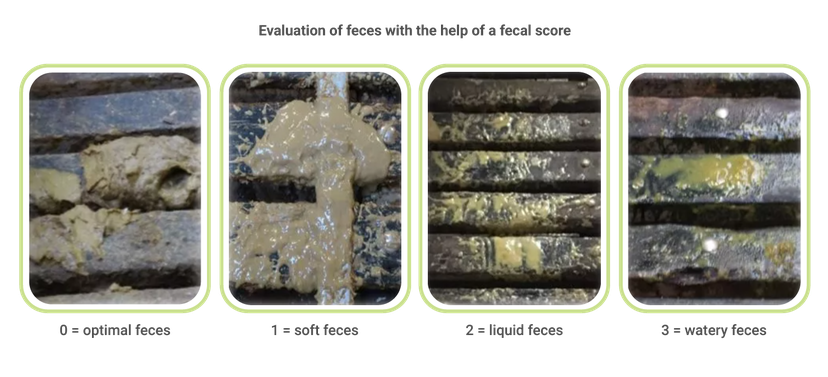
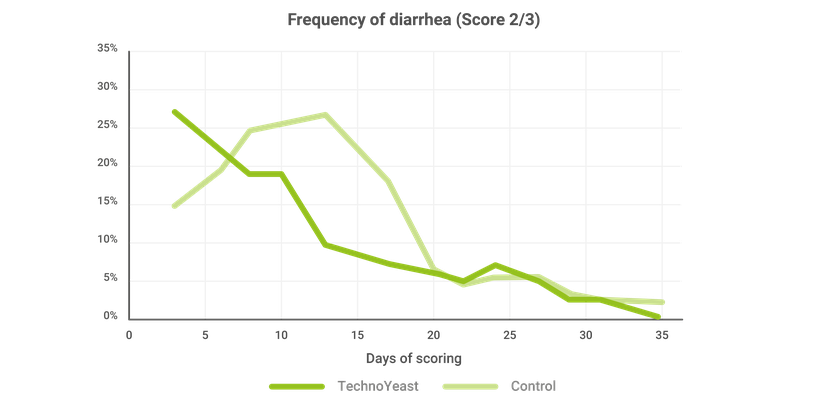
Figure 1 Evaluation of Feces with Fescal ScoreFigure 1: Diarrhea frequency in calvesFigure 1: Diarrhea frequency in calves with an average age of 15-21 days supplemented with or without the hydrolyzed yeast TechnoYeast which is based on the strain Kluyveromyces fragilis. In this test, TechnoYeast reduced the frequency and severity of diarrhea. Biochem Research, 2019.

Hydrolyzed yeast products can be used in milk replacers as well as in the calf TMR. A positive impact of the yeast product on the development of rumen microbiota can be expected when it is used in the calf TMR. This supports the calf in its development into a ruminant.

Conclusion.

Calves have to overcome a number of critical phases on their way to healthy and productive ruminants. At the beginning of their lives, the animals suffer from a weak immune system and underdeveloped digestive functioning. This results in digestive disorders, diarrhea and lower weight gain. Concerning the development of intestinal physiology, nutrient digestibility and immunity in calves, hydrolyzed yeasts, such as TechnoYeast, are a good way to support calves in their first weeks of life. Improvements in feed intake and growth performance, as well as a reduction in the risk of digestive disorders have been documented in a large number of feeding trials.

More Articles

Understanding the World Through Our Pets’ Eyes

Entendendo o mundo através dos olhos dos nossos animais de estimação

A vida moderna pode ser tão estressante para nós quanto para nossos animais de estimação. De tempestades repentinas a pequenas mudanças nas rotinas diárias, cães e gatos frequentemente precisam de um apoio extra para se sentirem seguros e tranquilos. Descubra como uma abordagem natural e suave para o equilíbrio emocional pode ajudar seu animal de estimação a permanecer “Naturalmente Estável” e “Suavemente Equilibrado” todos os dias.

Share on:
The Billion-Dollar Stress Problem You Can’t Cool Away

O problema bilionário do estresse térmico que não se resolve apenas com resfriamento

À medida que as temperaturas sobem e a pressão metabólica se acumula, as consequências econômicas para as operações leiteiras começam muito antes de as perdas se tornarem visíveis no tanque de leite. Descubra por que uma abordagem multifatorial para a resiliência ao estresse é o investimento mais eficaz que você pode fazer — para cada estação, cada ciclo, cada vaca.

Share on:
How to Reliably Prove the Efficacy of a Toxin Binder

Como comprovar a eficácia de um adsorvente de micotoxinas com segurança?

Como saber se o seu adsorvente de micotoxinas realmente funciona no organismo do animal? Descubra nosso método de avaliação validado que conecta uma simulação gastrointestinal precisa em laboratório com dados de referência de testes de desempenho in vivo multimicotoxinas em frangos de corte.

Share on:
Feed Intake First – The Top Priority.

Consumo de Ração Primeiro – A Prioridade Máxima.

The weaning transition is a critical window for piglet development. When feed intake drops, gut integrity follows, creating a cycle of poor performance. Our latest research explores how the umami-rich profile of Kluyveromyces fragilis provides a stable, natural foundation to maintain appetite and support immunity during this high-stress period.

Share on:
Securing the Future of Dairy Performance with Rumen Bypass Betaine.

BetaTrace®: Garantindo o futuro do desempenho leiteiro com betaína que contorna o rúmen.

A betaína padrão é frequentemente perdida devido à degradação no rúmen, limitando sua capacidade de apoiar as vacas em transição quando elas mais precisam. BetaTrace® supera esse desafio ao complexar a betaína com minerais orgânicos, permitindo que ela contorne o rúmen e apoie efetivamente a saúde e o metabolismo do fígado. Descubra como esse aditivo de dupla ação aumenta a disponibilidade de metionina e melhora o desempenho da lactação, ao mesmo tempo em que fornece minerais essenciais.

Share on:
Managing Mycotoxins: Real Stories, Real Solutions.

Gerenciando micotoxinas: histórias reais, soluções reais.

Quando um suinocultor enfrentou uma instabilidade inexplicável em seu rebanho de matrizes. Os adsorventes comuns a base de zeolita não solucionaram o problema. Leia como a mudança para B.I.O.Tox® Activ8 restaurou o desempenho reprodutivo e melhorou o número de leitões desmamados em um ensaio de campo de seis meses.

Share on:
Time to Rethink Weaning: Why Smarter Strategies Deliver Stronger Biological and Economic Outcomes in Dairy Calves.

É hora de repensar o desmame: por que estratégias mais inteligentes proporcionam melhores resultados biológicos e econômicos em bezerros leiteiros.

Encarar a criação de novilhas apenas como um centro de custos é ignorar seu potencial como um grande investimento na produtividade futura do seu rebanho. A fase de desmame é particularmente crítica; erros nessa fase podem anular os ganhos iniciais e reduzir permanentemente a produção de leite ao longo da vida. Descubra como facilitar o desmame e proteger seu investimento com RumiPro® Wean.

Share on:
Day-Old Chick Quality: Why is it an important topic?

Qualidade dos pintos de um dia: por que é um tema importante?

Descubra por que a qualidade dos pintos de um dia se tornou o fator decisivo no volátil mercado avícola atual. Saiba como as primeiras horas após a eclosão podem determinar o potencial de desempenho de todo o seu lote e porque os principais produtores estão implementando protocolos especializados de suporte inicial. Descubra estratégias comprovadas cientificamente que podem melhorar drasticamente a qualidade e a rentabilidade dos seus pintos de um dia (DOC).

Share on:
Managing Large Litters

Gerenciando ninhadas grandes.

O progresso na reprodução resultou em ninhadas maiores, mas não sem custos. As metas de reprodução das porcas mudaram nas últimas décadas, com foco na seleção de taxas de ovulação mais altas e ninhadas maiores. Isso não apenas aumenta a demanda e a pressão sobre as porcas, mas também aumenta a variação no peso ao nascer, a competição pelo úbere e as perdas antes do desmame. Este boletim informativo explica maneiras práticas e baseadas na ciência para apoiar a saúde das porcas, o fornecimento de colostro e leite e os cuidados iniciais com os leitões. Você também verá como a entrega à base de água e os conceitos de alimentação individualizada na fazenda podem aumentar a uniformidade e o sucesso do desmame.

Share on:
TechnoSpore® in Broilers: A Meta-Analysis.

TechnoSpore® em frangos de corte: uma meta-análise.

A produção moderna de frangos enfrenta desafios únicos devido ao rápido crescimento e à alta suscetibilidade a doenças. Descubra como TechnoSpore®, um probiótico à base de Bacillus coagulans DSM 32016, aumenta a eficiência da produção, melhorando a saúde intestinal e a digestibilidade da ração. Apoiado por estudos extensivos envolvendo mais de 3 milhões de aves, TechnoSpore® oferece resultados mensuráveis que podem melhorar significativamente o desempenho do seu rebanho.

Share on:
Mycotoxins: A Pervasive Challenge.

Micotoxinas: Um desafio generalizado.

As micotoxinas representam uma ameaça silenciosa, mas generalizada, à alimentação animal e à saúde do gado em todo o mundo. Descubra como esses perigos ocultos se desenvolvem, por que a contaminação múltipla é uma preocupação crescente e os métodos avançados essenciais para uma detecção precisa. Saiba como a Biochem enfrenta esses desafios e descubra o que é possível fazer com a análise de micotoxinas, incluindo estratégias personalizadas para proteger o bem-estar animal e a lucratividade.

Share on:
Rethinking Trace Minerals: Healthier Shrimp, Cleaner Planet with E.C.O.Trace®.

Repensando os minerais-traço: camarões mais saudáveis e um planeta mais limpo com E.C.O.Trace®.

Os minerais traço são vitais para o desempenho máximo dos seus animais, mas como podemos garantir sua ingestão ideal sem prejudicar o planeta? A suplementação tradicional pode levar a um desperdício significativo de minerais e a preocupações ambientais. Descubra como E.C.O.Trace® minerais traço orgânicos oferecem uma solução mais inteligente, melhorando a absorção para proporcionar uma saúde melhor aos camarões com menos impacto ambiental. É hora de alcançar mais com menos para um futuro sustentável na nutrição de camarões.

Share on:

Subscribe to our Newsletter.

Stay in the loop! Get educational insights and product news delivered right to your inbox. Sign up for our quarterly newsletter today!