Biochem
Products
Biochem
gmp+

GMP+ (FSA)

Feed Safety

A Futter

A-Futter

Quality Management

EG OKO

EG-Öko

Organic Feed

QS Feed Safety

QS

Feed Safety

GMP+FRA

GMP+ (FRA)

Quality Management

ISO 50001

ISO 50001

Energy Management

ISO 9001

ISO 9001:2015

Quality Management

VLOG

VLOG

Quality Management

EcoVadis

EcoVadis

Sustainability

Let’s Connect:LinkedInFacebookYoutube

Links

  • About Us
  • Contact Us
  • FAQs
  • Environment and Safety
  • Whistleblower Platform
  • Modern Slavery Act Statement

Products

  • All Products
  • TechnoSpore®
  • B.I.O.Tox® Activ8
  • E.C.O.Trace® Iron
  • BetaTrace® Iron
  • LiquiTonic LC

Animal Species

  • Ruminants
  • Poultry
  • Swine
  • Aquaculture
  • Companions

Legal

  • Imprint
  • Privacy Policy
  • Terms & Conditions

© 2025, Biochem Zusatzstoffe Handels- und Produktionsgesellschaft mbH

  • ImprintPrivacy PolicyTerms & Conditions
  1. Home
  2. News
  3. Articles
  4. Managing rumen stability properly. But how?

Managing rumen stability properly. But how?

Publicado el: January 18, 2022
Autor: Biochem Team
Hora: 4 min read
Compartir en:
Loading article content for text-to-speech...

Yeasts support a healthy rumen and optimal feed intake.

Yeast-based supplements can help your dairy cows to cope with difficult phases. They strengthen the rumen conditions and provide optimal support for the animals. A wide variety of products are in use.

For optimal feed intake in dairy cattle, the rumen is the most critical part of the ruminant digestion.

A delicate symbiosis of bacteria, fungi, and protozoa decomposes the feed components and supplies the ruminant with nutrients.

This system requires a continuous feed intake and an optimal interaction between eating and rumination activity. Disturbances of the system lead to a reduction in rumen stability and nutrient supply. The result is a reduction in the performance of the animals and an increase in the probability of diseases.

The problems often begin with reduced feed intake and regurgitating activity. Possible causes are various diseases. However, calving also regularly leads to a reduction in feed intake. Changes in the composition of feed rations can also be an influencing factor.

To break this negative cycle, feed additives and feed supplements are available to support the rumen microbes and thus stabilize the rumen conditions.

This method has proven itself many times in day-to-day dairy farm management and is therefore very popular. Different yeast products are used, and depending on the situation, products can be administered to the whole herd or to the individual animal.

Yeasts in ruminant nutrition.

There is a wide range of different yeast products, depending on the specific requirements of animal nutrition.

In addition to the probiotic live yeast, there are various inactivated yeasts: Yeast cultures, yeast cell walls and hydrolyzed yeasts.

  • Live yeasts are a “living” feed additive and are considered probiotics. In the rumen, they create anaerobic conditions which promote the growth of strictly anaerobic cellulolytic bacteria and thus the digestibility of crude fiber. Also, live yeasts reduce the growth of lactate-forming bacteria and at the same time promote lactate-degrading bacteria. The resulting pH stabilization improves the fermentation performance of the rumen and feed utilization. Higher feed utilization and a healthier rumen environment may lead to an increase in milk yield and fewer health problems for ruminants.

  • Yeast cell walls contain mannans, i.e., carbohydrates as polysaccharides. Mannans have an intestinal flora-stabilizing and pathogen-binding effect. In addition, other polysaccharides (β-1.3-1.6-glucans) stimulate the non-specific immune system.

  • Hydrolyzed yeasts: Hydrolysis is a gentle process that releases all nutrients and makes them more readily available. The digestibility of hydrolyzed yeast is comparable to that of animal protein sources. In addition to the yeast cell walls, hydrolyzed yeasts also contain the cell content, which is rich in peptides and micronutrients. These promote the growth of rumen microbes and thereby increase the digestibility of nutrients. The improved rumen fermentation stimulates feed intake, which results in increased milk yield.

RumiPro® Line for optimal rumen conditions.

Because of their favorable effects, feed supplements and additives that make use of the positive properties of yeasts are becoming more and more popular.

Under the name RumiPro®, Biochem has combined three products that complement each other, and all make a decisive contribution to optimized dairy cattle feeding. We recommend two products for use at herd level:

RumiPro® Top is a combination of live and hydrolyzed yeast. This creates optimal conditions in the rumen and additionally supplies the rumen bacteria with micronutrients.

RumiPro® Basic is a hydrolyzed yeast that is used for pelleted dairy cattle compound feed when live yeast products cannot be used efficiently.

RumiPro® Appetizer is a good alternative for problems that affect individual animals rather than the entire herd.

RumiPro Appetizer: Increases rumination activity.

With RumiPro® Appetizer, Biochem has a product in its portfolio that supports ruminants specifically and individually in times of significantly reduced feed and chewing activity.

On the one hand, RumiPro® Appetizer contains substances that can easily be used by rumen bacteria as a food source. That stimulates their growth and activity. On the other hand, a synergistic yeast combination optimizes the conditions for rumen microbes.

To investigate the effects of RumiPro® Appetizer on the health and performance of dairy cows, Biochem recently conducted a field study: the chewing activity, performance data and health status of 40 dairy cows were recorded right after calving.

Half of the animals in the treatment group (the other half was the control group) were given the product RumiPro® Appetizer orally immediately after calving and again after approx. 12 hours.

The results are clear: the typical decrease in chewing activity at the time after calving was reduced by supplementation. The animals in the treatment group regained their regular rumination activity much faster.
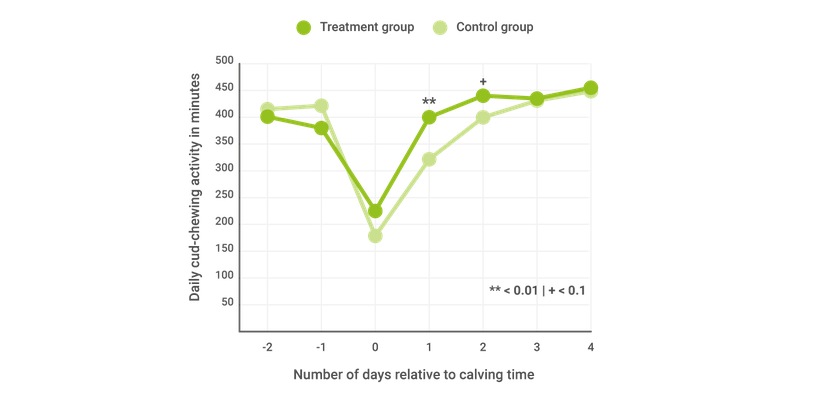
Figure 1 RumiPro Chewing ActivityAlso, the animals in the treatment group showed an increased milk yield in the first six weeks of lactation compared to the control group. RumiPro® Appetizer helped the animals to start lactation even better.

Conclusion.

Insufficient feed intake in dairy cattle is a common problem, especially around calving time. However, also during or after illnesses, a reduced feed intake can lead to further problems.

Yeast-based feed supplements and additives, such as Biochem’s RumiPro® line, have proven to be an effective way to control rumen conditions so that feed intake and chewing activity return to optimal levels faster. That naturally has a positive effect on the milk yield, and therefore yeast products are increasingly accepted in practice.

A wide range of yeast-based feed supplements and additives offers the possibility of targeted support, depending on the circumstances and the problem at hand.

More Articles

Unlocking Mineral Efficiency in Poultry with BetaTrace®

Optimizando la Eficiencia Mineral en Avicultura con BetaTrace®

Discover how betaine-bound trace minerals can support poultry performance, bone mineralization, eggshell quality, and antioxidant defense with optimized mineral supplementation.

Share on:
EU Mycotoxin Guidance Values Tighten - How Feed Manufacturers Can Prepare for 2027

Se Endurecen los Valores Orientativos de Micotoxinas en la UE: Cómo Pueden Prepararse los Fabricantes de Piensos para el 2027

Los nuevos valores orientativos serán aplicables a partir de 2027. Descubre cómo pueden prepararse el sector de la alimentación animal mediante análisis específicas y una gestión eficaz de las toxinas.

Share on:
Productive resilience in modern poultry production - Thriving under stress

Resiliencia productiva en la avicultura actual: rendir a pesar del estrés

Factores de estrés habituales como el calor, la vacunación o el manejo desencadenan una serie de respuestas fisiológicas que desvían la energía disponible para el crecimiento. Descubre como una estrategia estructurada y adaptada a cada etapa productiva ayuda a mantener la integridad intestinal, proteger la función hepática y conservar el rendimiento del lote.

Share on:
Understanding the World Through Our Pets’ Eyes

Comprender el mundo a través de los ojos de nuestras mascotas

La vida moderna puede ser tan estresante para nuestras mascotas como lo es para nosotros. Desde tormentas repentinas hasta pequeños cambios en la rutina diaria, los gatos y los perros suelen necesitar un poco de apoyo extra para sentirse a gusto. Descubre cómo un enfoque natural y suave para el equilibrio emocional puede ayudar a tu mascota a mantenerse «naturalmente centrada» y «suavemente equilibrada» cada día.

Share on:
The Billion-Dollar Stress Problem You Can’t Cool Away

El problema multimillonario del estrés que no se puede airear fácilmente

A medida que las temperaturas aumentan y la presión metabólica crece, las consecuencias económicas para las explotaciones lecheras comienzan mucho antes de que las pérdidas se hagan visibles en el tanque de leche. Descubra por qué un enfoque multifactorial para la resiliencia al estrés es la inversión más eficaz que puede realizar: para cada estación, cada ciclo, cada vaca.

Share on:
How to Reliably Prove the Efficacy of a Toxin Binder

¿Cómo demostrar realmente la eficacia de un secuestrante de micotoxinas?

¿Cómo saber si su secuestrante de micotoxinas realmente funciona dentro del animal? Descubra nuestro método de evaluación validado que conecta una precisa simulación gastrointestinal en laboratorio con pruebas de rendimiento in vivo frente a múltiples toxinas en pollos de engorde.

Share on:
Feed Intake First – The Top Priority.

El Consumo de Pienso: La Prioridad Máxima.

La fase de transición es un periodo crítico para el desarrollo de los lechones. Cuando la ingesta de pienso disminuye, la integridad intestinal se ve comprometida, creando un ciclo de bajo rendimiento. Nuestra investigación más reciente explora cómo el perfil de Kluyveromyces fragilis, rico en sabor umami, ofrece una base natural y estable para mantener el apetito y apoyar la inmunidad durante este periodo de alto estrés.

Share on:
Securing the Future of Dairy Performance with Rumen Bypass Betaine.

BetaTrace®: asegurando el rendimiento lechero futuro con betaína by-pass.

La betaína estándar a menudo se pierde debido a la degradación en el rumen, lo que limita su capacidad para ayudar a las vacas en transición cuando más lo necesitan. BetaTrace® supera este reto al combinar la betaína con minerales orgánicos, lo que le permite pasar el rumen y favorecer eficazmente la salud y el metabolismo del hígado. Descubra cómo este aditivo de doble acción aumenta la disponibilidad de metionina y mejora el rendimiento de la lactación, al tiempo que aporta minerales esenciales.

Share on:
Managing Mycotoxins: Real Stories, Real Solutions.

Gestión de las micotoxinas: historias reales, soluciones reales.

Cuando un ganadero porcino se enfrentó a una inestabilidad inexplicable en su piara de cerdas y los secuestrantes a base de zeolita estándar no proporcionaron una solución. Lea cómo el cambio a B.I.O.Tox® Activ8 restauró el rendimiento reproductivo y mejoró el número de lechones destetados en una decisiva prueba de campo de seis meses.

Share on:
Time to Rethink Weaning: Why Smarter Strategies Deliver Stronger Biological and Economic Outcomes in Dairy Calves.

Momento de replantearse el destete de las terneras: por qué estrategias más inteligentes ofrecen mejores resultados biológicos y económicos.

Considerar la recría de novillas como un mero centro de costes pasa por alto su potencial como una inversión masiva en la productividad futura de su rebaño. La fase de destete es especialmente crítica; los errores en esta fase pueden echar por tierra los beneficios iniciales y reducir de forma permanente la producción de leche a lo largo de la vida productiva. Descubra cómo facilitar el destete y proteger su inversión con RumiPro® Wean.

Share on:
Day-Old Chick Quality: Why is it an important topic?

Calidad de los pollitos de un día: ¿por qué es importante?

Descubra por qué la calidad de los pollitos de un día se ha convertido en un factor decisivo en el volátil mercado avícola actual. Aprenda cómo las primeras horas después de la eclosión pueden determinar el potencial rendimiento de todo el cebo y por qué los principales productores están implementando protocolos especializados de apoyo temprano. Descubra estrategias respaldadas por la ciencia que pueden mejorar drásticamente la calidad y la rentabilidad de sus pollitos de un día (DOC).

Share on:
Managing Large Litters

Manejo de camadas numerosas.

La mejora genética ha dado lugar a camadas más numerosas, pero no sin costes. Los objetivos de selección de las cerdas han cambiado en las últimas décadas, centrándose en tasas de ovulación más altas y camadas numerosas. Esto no solo aumenta la demanda y la presión sobre las cerdas, sino que camadas grandes aumentan la variación en el peso al nacimiento, la competencia por la ubre y las bajas predestete. Este boletín explica formas prácticas y basadas en la ciencia para apoyar la salud de las cerdas, el suministro de calostro y leche, y el cuidado temprano de los lechones. También verá cómo los conceptos para uso en agua y de alimentación individualizada en la granja pueden aumentar la uniformidad y el éxito del destete.

Share on:

Subscribe to our Newsletter.

Stay in the loop! Get educational insights and product news delivered right to your inbox. Sign up for our quarterly newsletter today!