Biochem
Products
Biochem
gmp+

GMP+ (FSA)

Feed Safety

A Futter

A-Futter

Quality Management

EG OKO

EG-Öko

Organic Feed

QS Feed Safety

QS

Feed Safety

GMP+FRA

GMP+ (FRA)

Quality Management

ISO 50001

ISO 50001

Energy Management

ISO 9001

ISO 9001:2015

Quality Management

VLOG

VLOG

Quality Management

EvoVadis

EcoVadis

Sustainability

Let’s Connect:LinkedInFacebookYoutube

Links

  • About Us
  • Contact Us
  • Careers
  • FAQs
  • Articles
  • Press Releases
  • Environment and Safety
  • Whistleblower Platform

Products

  • All Products
  • TechnoSpore®
  • B.I.O.Tox® Activ8
  • E.C.O.Trace® Iron
  • BetaTrace® Iron
  • TechnoYeast
  • LiquiTonic LC

Animal Species

  • Ruminants
  • Poultry
  • Swine
  • Aquaculture
  • Companions

Legal

  • Imprint
  • Privacy Policy
  • Terms & Conditions

© 2025, Biochem Zusatzstoffe Handels- und Produktionsgesellschaft mbH

  • ImprintPrivacy PolicyTerms & Conditions
  1. Home
  2. News
  3. Articles
  4. How to Feed Transition Cows for success?

How to Feed Transition Cows for success?

Published on: March 29, 2021
Author: Biochem Team
Time: 5 min read
Share on:
Loading article content for text-to-speech...

The transit time of dairy cows is defined as the period six to eight week around calving, and it influences enormously the lactation and its success. Many health problems originate in the transit period. Dairy cows’ well-being and performance depend on the transit period being as smooth as possible. During this time, the cow undergoes changes in energy requirements simply due to the onset of lactation. We can see changes in the utilization and metabolism of fats and proteins, at hormonal level, and in the utilization of calcium.1

With the onset of lactation, the energy requirement for milk production increases, but even before it increases due to the growth of the fetus. In this context, the energy balance is defined as the difference between the energy consumed by the cow and the energy required daily to meet maintenance and performance needs.2 If the energy balance is positive, the excess energy is stored in fat depots; if the energy balance is negative (NEB), energy reserves are used for energy production.

Influences on the energy balance.

The two most important factors influencing energy balance are milk yield and energy intake.2 However, there is also a correlation between energy balance and cow health.3

What is the reason for this? In NEB fatty acids (NEFA) are mobilized from fat reserves. The NEFAs are taken up by the liver to be used for energy. When this occurs excessively or over a long period, the amount of NEFA that has been mobilized exceeds the capacity of the liver, resulting in increased formation of ketone bodies that can be detected in the blood (Figure 1). Although the ketone bodies also serve to produce energy, in high concentrations they cause damage. They can cause subclinical and clinical ketosis or promote the development of other diseases such as abomasal displacement or uterine inflammation.4 High NEFA and ketone body concentrations in the blood suppress the immune system and reduce feed intake.5 Another consequence is lower milk performance.4
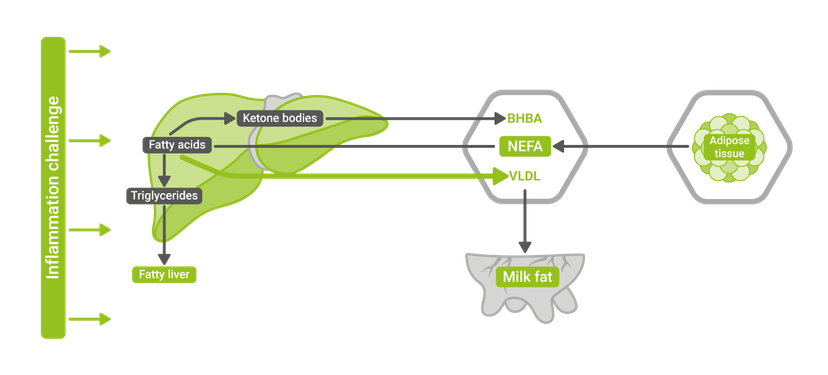
Figure 1: Mobilization of fatty acids and their metabolismFigure 1: Mobilization of fatty acids and their metabolism.

And what influence does the feed intake have?

A very big one! Dry matter intake has an influence not only on energy balance but also on metabolic health and lactation performance.6 Cows with high dry matter intake have a lower risk of metabolic disorders, whereas cows with low dry matter intake have been shown to have higher concentrations of ketone bodies and NEFAs in the blood.7 The goal should be to ensure high dry matter intakes!

Does inflammation play a role?

Definitely! Inflammations occurring peripartum have negative effects on feed intake. Causes for inflammation in the transit period are manifold: the birth process alone triggers inflammatory reactions, but also uterine inflammation, rapid ration changes with subsequent “leaky gut” syndrome or heat stress cause an increase in inflammatory markers in the blood.8 Depending on the extent of inflammation, there is an increased risk of other diseases.8 And the same consequence here - the inflammation affects the milk performance.

Another change—the need for minerals.

Not only fat is mobilized, but also minerals such as calcium and phosphorus. With the onset of lactation, the calcium requirement increases and triples within a few days.9 If the blood calcium level cannot be regulated, the clinical form of hypocalcemia develops. But the subclinical form of hypocalcemia also affects the health of dairy cows by increasing the risk of other diseases.9

How can dairy cows successfully manage the transit period?

Feed intake is crucial!

The goal in any feeding system is to provide cows with a ration that meets their requirements10 and to achieve good dry matter intakes just before parturition and in early lactation. Of course, barn conditions, equipment, herd size, management and cost must be considered when selecting a feeding method. High performance should come to a greater from palatable high-quality roughage. This is because it ensures both nutrient and structural supply. Feed intake and its maintenance are crucial in preventing metabolic diseases.7 Better energy supply both just before calving and in the first third of lactation not only helps to avoid therapy costs but also to achieve higher milk yields.7

How do I ensure high dry matter intakes? It is important to provide good quality feed, closely monitor the animals and ensure adequate feeding spaces, as well as an environment that is as stress-free as possible. The cows’ fossa paralumbalis is an important tool for checking rumen fullness and dry matter intake.7 In addition, roughage helps stimulate forestomach functions, but yeasts, sodium propionate, glycerol and B vitamins are also helpful for rumen stimulation.7

How to maintain good feed intake during the transition period (in accordance with Drackley and Cardoso, 201411):

  • Reduce stress!  

  • Avoid very high body condition scores!  

  • Avoid energy oversupply during dry period! 

  • Feed qualitative and tasty roughage! 

  • Monitor the cows closely! 

  • Avoid excessive intake of rapidly fermentable starch postpartum! 

  • Support the immune system!

  • Prevent excessive inflammatory reactions! 

Keeping inflammation under control—but how?

There are several ways to reduce the extent of inflammation. For systemic inflammation that is already showing symptoms such as increased internal body temperature, veterinary advice should be sought, and therapy initiated. Various additives can be used as preventive measures. Polyphenols, secondary metabolites synthesized by plants have a natural defense function.12 Their anti-inflammatory properties have already been described in numerous studies and are based on blocking the activation of the transcription factor NF-κB, which is involved as key role in the regulation of inflammation.12 In addition, polyphenols can prevent the development of oxidative stress.12 Some studies, summarized by Gessner et al., 2017, showed that polyphenols also have the potential to decrease inflammation in dairy cows and reduce stress at the cellular level in the liver of transit cows. Savings in energy expended on inflammatory responses can result in improved milk yield.12

Which supplementary feed can you use to optimally support your dairy cows’ metabolic health during the transit period and prevent excessive inflammatory reactions?

We recommend KetoCoat as 3-in-1 protection during this challenging period. It contains grape seed extract in rumen-protected form, which is rich in polyphenols. At the same time, other ingredients help to support fat metabolism, thus promoting the liver health of the dairy cows.

Is the feed intake or lower palatability of the feed your bigger problem? Then we have other strategies for you! Contact our experts!

More Articles

Feed Intake First – The Top Priority.

Feed Intake First – The Top Priority.

The weaning transition is a critical window for piglet development. When feed intake drops, gut integrity follows, creating a cycle of poor performance. Our latest research explores how the umami-rich profile of Kluyveromyces fragilis provides a stable, natural foundation to maintain appetite and support immunity during this high-stress period.

Share on:
Securing the Future of Dairy Performance with Rumen Bypass Betaine.

BetaTrace®: Securing the Future of Dairy Performance with Rumen Bypass Betaine.

Standard betaine is often lost to rumen degradation, limiting its ability to support transition cows when they need it most. BetaTrace® overcomes this challenge by complexing betaine with organic trace minerals, allowing it to bypass the rumen and effectively support liver health and metabolism. Discover how this dual-action additive increases methionine availability and boosts lactation performance while delivering essential minerals.

Share on:
Managing Mycotoxins: Real Stories, Real Solutions.

Managing Mycotoxins: Real Stories, Real Solutions.

When a pig farmer faced unexplained herd instability in his sows, standard zeolite binders failed to provide a solution. Read how switching to B.I.O.Tox® Activ8 restored reproductive performance and improved weaned piglet numbers in a decisive six-month field trial.

Share on:
Time to Rethink Weaning: Why Smarter Strategies Deliver Stronger Biological and Economic Outcomes in Dairy Calves.

Time to Rethink Weaning: Why Smarter Strategies Deliver Stronger Biological and Economic Outcomes in Dairy Calves.

Viewing heifer rearing merely as a cost center overlooks its potential as a massive investment in your herd's future productivity. The weaning phase is particularly critical; mistakes here can undo early gains and permanently reduce lifetime milk yields. Discover how to smoothen weaning and protect your investment with RumiPro® Wean.

Share on:
Day-Old Chick Quality: Why is it an important topic?

Day-Old Chick Quality: Why is it an important topic?

Discover why the quality of day-old chicks has become the make-or-break factor in today's volatile poultry market. Learn how the first hours after hatching can determine the performance potential of your entire flock, and why leading producers are implementing specialized early support protocols. Unlock science-backed strategies that can dramatically improve your day-old chick (DOC) quality and profitability.

Share on:
Managing Large Litters

Managing Large Litters.

Breeding progress has delivered bigger litters—but not without costs. Sow breeding goals have changed over the past few decades with a focus on selecting higher ovulation rates and large litter sizes. Not only does this place increased demand and pressure on sows, but large litters increase birth weight variabilityt, competition at the udder, and pre-weaning losses. This newsletter explains practical, science-based ways to support sow health, colostrum and milk supply, and early piglet care. You’ll also see how water-based delivery and farm-individual feeding concepts can boost uniformity and weaning success.

Share on:
TechnoSpore® in Broilers: A Meta-Analysis.

TechnoSpore® in Broilers: A Meta-Analysis.

Modern broiler production faces unique challenges due to rapid growth and high disease susceptibility. Discover how TechnoSpore®, a probiotic based on Bacillus coagulans DSM 32016, enhances production efficiency by improving gut health and feed digestibility. Backed by extensive studies involving over 3 million birds, TechnoSpore® delivers measurable results that can significantly improve your flock's performance.

Share on:
Mycotoxins: A Pervasive Challenge.

Mycotoxins: A Pervasive Challenge.

Mycotoxins pose a silent, yet pervasive threat to animal feed and livestock health worldwide. Discover how these hidden dangers develop, why multi-contamination is a growing concern, and the advanced methods crucial for accurate detection. Learn how Biochem faces these challenges. Discover what is possible with mycotoxin analysis including tailored strategies to protect animal welfare and profitability.

Share on:
Rethinking Trace Minerals: Healthier Shrimp, Cleaner Planet with E.C.O.Trace®.

Rethinking Trace Minerals: Healthier Shrimp, Cleaner Planet with E.C.O.Trace®.

Trace minerals are vital for your animals’ peak performance, but how can we ensure their optimal intake without harming our planet? Traditional supplementation can lead to significant mineral waste and environmental concerns. Discover how E.C.O.Trace® organic trace minerals offer a smarter solution, enhancing absorption to deliver better shrimp health with less environmental impact. It’s time to achieve more with less for a sustainable future in shrimp nutrition.

Share on:
Smooth Transitions: Choline’s Secret to Dairy Success

Smooth Transitions: Choline’s Secret to Dairy Success.

Did you know that supporting your dairy cows with choline can significantly improve milk production and herd health during the critical transition period? Discover how RumiPro® Chol helps cows efficiently manage nutrient shifts, reducing the risk of fatty liver and enhancing overall performance—benefiting both cows and their calves. Learn more about how choline can optimize your herd’s success!

Share on:
How Yeast Cell Walls Are Shaping the Future of Poultry Production

How Yeast Cell Walls Are Shaping the Future of Poultry Production.

Poultry production is soaring to meet the protein needs of a rapidly expanding global population. With antibiotic restrictions and pathogen pressure pushing birds to their limits, gut health is now mission-critical for success. Discover how yeast cell walls like TechnoMos® are transforming poultry performance, supporting disease resistance, and boosting productivity.

Share on:
Navigating Weaning Challenges: Optimizing Piglet Health and Performance

Navigating Weaning Challenges: Optimizing Piglet Health and Performance.

Weaning can be a make-or-break moment for piglet health and performance. Learn what “gut health” looks like and how the process of weaning affects piglets. Discover how targeted nutritional strategies, including prebiotics, probiotics, and more, can minimize stress, support gut health, and pave the way for a smooth transition and optimal growth.

Share on:

Subscribe to our Newsletter.

Stay in the loop! Get educational insights and product news delivered right to your inbox. Sign up for our quarterly newsletter today!