The Irreplaceable Nutrient
Water: More than just refreshing; it’s the very essence of life. Often called the “elixir of life,” water’s vital role in sustaining life is undeniable. While most animals can go weeks without food, survival without water is limited to a few days at most, underscoring its crucial status as the most important of all nutrients.
Reading the Signs: Water as a Health Indicator
Water is involved in several essential metabolic functions (Figure 1). For example, it is essential for the osmotic balance of cells, transporting nutrients and removing harmful substances from the body, and regulating body temperature and digestion, to name but a few. In general, birds consume about twice as much water as feed, but this depends on several factors such as:
temperature
humidity
stocking density
breed, age
weight
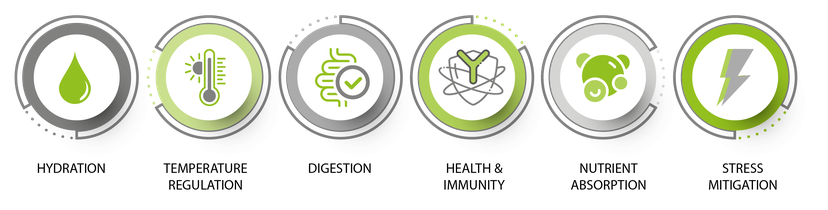 Figure 1: Water has many essential functions in the body.
As water is fundamental to many metabolic functions, water consumption can be used as an indication that the birds are not feeling well or that something is wrong—even before the first signs of illness are seen. For example, reduced water intake can be a sign that the house temperature is too low or of a possible disease outbreak (such as coccidiosis).
Increased water intake can often be a sign of an impending outbreak of an inflammatory disease, or that the temperature is too high, leading to thermal stress. Under thermal stress from heat, birds will drink more to cool themselves if the water is colder than their body temperature. Thus, water intake can be viewed as an early warning system for poultry, and changes in water intake can be a sign of an impending problem.
Water-Based Supplementation
Poultry needs support during periods of stress or disease. One way to provide support is through medicated feed additives (pain relievers, antibiotics, etc.). Drinking water supplementation can also be an effective way to support birds during critical periods. The decision to use one or the other depends on the urgency of the problem. Feed additives are a valuable choice to provide the stable foundation needed for optimal growth and performance. However, it is difficult to address sudden changes in a bird’s needs with feed additives.
Drinking water supplements are uniquely positioned for spontaneous use in urgent situations. Often used in high doses for short periods of time, they are used as an adjunct to treatment and in addition to feed additives to provide short-term support in critical situations. Water is an efficient and effective delivery vehicle for water-soluble medicaments and supplements.
For one, water treatments can reduce overall handling stress, such as during vaccinations, but it is also an excellent medium for treatments or support during illness when handling is difficult or when in-feed treatments are ineffective due to reduced feed intake. In addition, stressed or sick animals often reduce or stop eating but continue to drink water, making in-feed treatments ineffective but water support highly successful.
The use of additives in the water gives the farmer full control over their use. This means that the type, dosage, and duration can be adjusted to best meet the needs of the animals. In addition, the supplement can be applied immediately, bypassing the longer ordering, manufacturing and delivery times required for an in-feed application. This provides excellent flexibility in terms of treatment types, schedules, and duration.
Water Quality: A Foundation for Health
Clean, quality water is the foundation of good animal husbandry. Several factors influence poultry’s acceptance of water; in fact, the taste of the water has a major impact. Poultry can detect basic tastes—salty, sweet, bitter, and sour—but are more sensitive to bitter flavors, which may help them avoid potentially toxic substances. Moreover, they prefer slightly acidic tasting water and, while not necessarily rejecting alkaline water, will reduce water intake when water pH rises above 8. Water from different regions and sources can vary in quality and characteristics—such as high levels of trace minerals—which can negatively affect taste.
 In addition to taste, water quality is critical and requires regular monitoring of pH level, mineral content, and microbial contamination. Another important but difficult factor to manage is water temperature as cool water improves water intake in warm temperatures and helps to minimize biofilm development. This is especially important when adding supplements to the water line.
Some ways to provide cool water include insulating water lines and reservoirs, placing watering devices in covered or shaded areas, refilling water containers with cool, fresh water throughout the day, and increasing the size of water containers. In extreme heat, it may be necessary to install cooling systems to cool the air around the watering system.
The quality, condition, and design of an irrigation system can also affect biofilm development. Increased water pressure and constant flow can help prevent biofilm development compared to low flow or stagnant water, dry lines, and dead ends. Stainless steel piping is more resistant to biofilm buildup than plastic components, which can become porous or cracked, providing the ideal surface for biofilm attachment.
A biofilm’s nutrient supply largely depends on the quality of the water and any supplements added. The levels of Ca2+ and Fe2+ ions also play an important role, as they can be metabolized by certain bacteria or used as structures for attachment. These ions may also affect the function of the watering system resulting in decreased water intake and poor performance. Added nutrients, minerals, and probiotics that benefit the animals may also benefit the microorganisms in the biofilm.
General water quality standards, including ideal mineral levels, are readily available on the Internet. A particularly useful overview has been published on The Poultrysite by Dr. S. Watkins, a leading expert in evaluating and improving drinking water quality for livestock production.
Water Line Hygiene: A Crucial Component
When administering supplements or medications in drinking water, water line hygiene is key. Ultimately, the goal is to keep the lines free of non-beneficial microbes, an often-elusive task. Flushing the lines regularly—daily, at best—is the simplest method of improving water line hygiene. This removes old, warm water, and microbes. Daily flushing is especially important during the first few days of housing, when temperatures are high, and water intake is low. In addition, flushing the lines after each supplement water application will help remove any residue.
Disinfecting and cleaning the lines both during and between cycles is another important aspect of water hygiene. After each cycle, the water system should be cleaned and disinfected with the same thoroughness as the rest of the house using a cleaning agent that can remove any biofilm that may have accumulated. Cleaning agents can be acids, bases, hydrogen-peroxide, or chlorine, which can also reduce the number of microbes in the water lines (figure 2).
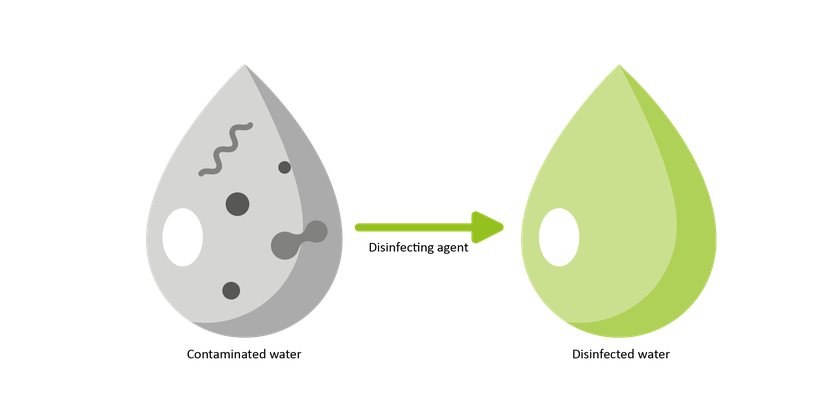 Figure 2: Disinfecting water can be accomplished with several types of disinfectants including chlorine dioxide, hydrogen peroxide, and peracetic acid. Refer to local guidelines and regulations.
It is important to follow the local regulations for the categories of cleaners and disinfectants that can be used for different situations. For example, the EU Biocidal Products Regulation categorizes biocidal products based on their intended use.
The PT5 category of disinfectants is used to disinfect drinking water for humans and animals, including poultry, and includes chlorine dioxide, hydrogen peroxide, and peracetic acid. Essential for preventing contamination and ensuring food safety, PT4 disinfectants are used to keep surfaces and equipment that come into contact with food and feed free of harmful pathogens. Examples include formaldehyde, glutaraldehyde, and sodium hypochlorite. As each type and method has its own advantages and considerations, it is important to choose one that best fits the specific needs and complies with local regulations.
Elevate Your Water Management
As water is the lifeblood of any flock, clean and properly managed waterlines provide the foundation for robust health, efficient nutrient utilization, and timely responses to emerging challenges. By continuously monitoring water quality, maintaining sanitary distribution systems, and incorporating water-based supplements and medications, producers can ensure their birds thrive in ever-changing conditions.
Now is the time to elevate your water management practices—evaluate your water lines, invest in proper sanitation protocols, and adopt flexible supplementation strategies. In doing so, you will unlock the full potential of your birds and set the stage for more resilient, productive, and profitable poultry operations. For more information on nutrient supplementation through drinking water, please contact your expert Biochem representative.


