The mightiest methyl-group donor
The Case for Betaine.
It all begins with the methyl-group. Methyl-groups are highly stable molecules composed of one central carbon atom bonded to three hydrogen atoms. They do not exist solitarily—but rather as part of a larger molecule. They are involved in methylation—a process by which the entire group transfers to another molecule. This process is an extremely important metabolic process that imparts a sizable influence on cellular functions.
Methyl-group metabolism is a metabolically demanding process that has significant nutritional implications. The availability of methyl groups is vital for RNA and DNA synthesis, gene regulation, immune function, protein synthesis, and fatty acid metabolism. The more than 50 critical methylation pathways all share the same need for a common substrate—methyl-groups. During growth and development, these pathways are highly active, not only for maintaining basic functions but also to meet the demands for growth.
Animals cannot synthesize methyl-groups and thus need to receive them via feed. The animal’s primary source of methyl groups come methionine—however, methionine is not only the primary source of methyl groups but also is required for protein synthesis. Once methionine gives up its methyl-group, the resulting cytotoxic molecule—homocysteine—can either be re-methylated (when there are additional sources of methyl-groups) or converted to cysteine when there are no available methyl-groups for re-methylation.
Adding methyl-groups to the system.
There are several molecules that function as a source of additional methyl-groups—namely folate, choline, betaine. Choline is—and has been—added to the feed as a methyl donor and to spare methionine. Choline is a pro-vitamin that is required at a much higher level than other vitamins. Typically thought of as a methyl-group donor, choline has its own important functions in the body:
As a precursor for neurotransmitter synthesis
As a required constituent of cell membranes
As a component needed for fat metabolism in the liver
As a methyl group donor after being oxidized to betaine
Unlike most vitamins, choline can be synthetized by the majority of animal species. However, synthesis may become insufficient requiring supplementation in the diet. The need for dietary supplementation depends on the species and age of the animal as well as the amount of choline contained in the feed’s raw materials. It should be noted, though, that most feedstuffs contain enough choline to meet the animal’s basic needs. Additional choline added to the feed formulation will be mainly a source of additional methyl groups.
The most common choline source for addition to the diet is choline chloride. However, despite widespread use, choline chloride has several disadvantages. Choline chloride interacts adversely with vitamins—studies have demonstrated that in premixes with added choline chloride, vitamins K, C, B1, and A stability decreased dramatically compared to premixes without choline chloride.
Choline chloride is incompletely absorbed in the intestine—often requiring a high inclusion rate. The risk of unabsorbed choline chloride is the transformation into trimethylamine by intestinal microbiota, which can be absorbed and is associated with a fishy smell in eggs. Additionally, the manufacture of synthetic choline chloride uses ethylene oxide—another possible risk of contamination. Choline chloride has a corrosive nature and can damage feed mill equipment.
Now, it's time for betaine!
Betaine, like choline and methionine, is an important donator of methyl groups, which can reduce the requirements for other methyl group donors. It is a natural compound widely distributed in plants, animals, and microorganisms. Betaine can be formed from the oxidation of choline or obtained from the diet. Both the kidneys and liver express transport systems that take up betaine from the blood. The liver stores betaine where it functions primarily as a methyl donor (figure 1).
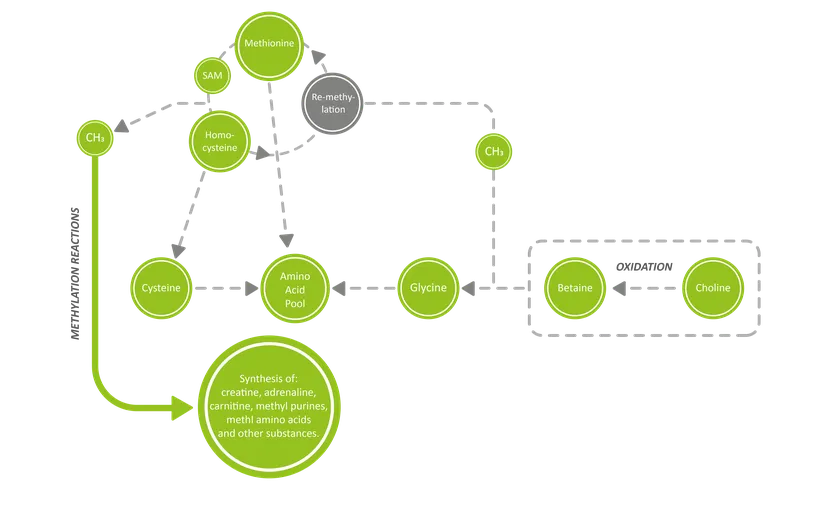 Figure 1. Betaine’s role in the methylation cycle (adapted from Eklund etal., 2005).
Increasing stress—such as heat stress—increases an animal’s need for methyl groups. Moreover, this need is not fixed and changes with time and conditions. Ensuring a ready supply of methyl groups in the liver allows for optimal performance and resistance to stressors. Betaine is the ideal molecule to achieve this—not only is it more efficient than choline chloride, with its wide margin if safety, betaine is a better option than increasing methionine. A high betaine concentration in the liver maximizes the availability of methyl groups imparting a resilience that is key for successful animal production.
Two forms of betaine are often used as feed additives—anhydrous betaine, and betaine hydrochloride. Betaine anhydrous is a bipolar molecule similar to natural betaine whereas betaine hydrochloride is a synthetic molecule. Betaine has numerous advantages over choline chloride in diets. Betaine is a much more efficient supplier of methyl groups than choline. Before it can serve as a methyl-group donor, choline must be oxidized to betaine—supplying betaine in the diet eliminates this step. It has been demonstrated that, compared to betaine, choline is only 55% as efficient in supplying methyl groups. Moreover, since betaine has a lower molecular weight than choline chloride, you get more bang for your buck. Betaine is 2.17 times more efficient in donating methyl groups compared to choline chloride.
Betaine can be especially helpful in poultry diets. To maintain the optimal electrolyte balance, a balanced supply of cations (Na+ and K+) and anions (Cl-) are necessary. When adding choline chloride to poultry diets as a methyl group donor, there is often an increase in chloride anions. As such, the addition of sodium bicarbonate is used to increase sodium cations, which is inefficient and costly. Betaine has a chloride sparing effect. Replacing choline chloride with betaine means that less sodium bicarbonate is used in the formulation and chloride anions can be balanced with sodium chloride for a cost savings.
One further advantage to betaine use over choline chloride—specifically betaine anhydrous—is its osmolyte effect. Osmolytes are small compounds that are accumulated by cells during stressful external conditions. As an osmolyte, betaine increases water retention in the call. Betaine will also protect cellular structures such as proteins, enzymes, and DNA and is very important for cells experiencing osmotic stress. Lastly, betaine does not react with, and may even be protective of, sensitive vitamins in premixes or feed and is non-destructive to feed mill equipment.
Hepatron® is a range of liquid and powder betaine feed additives that are an efficient solution for increasing the availability of methyl-groups. Hepatron® offers superior flexibility in its application—add it to premixes or directly into the feed mixer. Hepatron® consists of several established betaine products that vary in their effects, handling, and costs. We have years of experience using betaine and offer a comprehensive selection of Hepatron® products to meet your individual feed needs. Contact us to find out how any of the Hepatron® family can benefit you and your animals.
Although betaine is not able to replace the primary and essential functions of choline, it can deliver methyl-groups quicker and with less energy loss than choline chloride. Adding betaine to the feed allows methionine and choline do their crucial work—if you are adding choline chloride to your formulation to increase methyl-groups, then betaine is the better bet!
Leave the methyl-group donating to the mightiest methyl-group donor—betaine!


