Without a Trace
Using trace minerals to fight oxidative stress.
Trace minerals are important for raising healthy animals—it is well understood that they are critical for optimal growth and performance. The amounts needed per day are measured in milligrams or less, but are essential to sustain life, fight disease, and promote growth, development, and healthy reproduction in animals. For example, zinc (Zn) is required for immunity, reproduction, skin and hoof integrity, muscle development, milk production, and eggshell quality. Manganese (Mn) helps bone and cartilage formation, immune function, reproduction, and gluconeogenesis. Copper (Cu) is critical for melanin pigment formation, energy production, iron absorption, and metabolic function. Iron (Fe) has several functions—it is necessary for oxygen and cell respiration, energy production, and immune function. When an animal has the proper balance of trace minerals it is better able to cope with the challenging effects of stress. These trace minerals have another critical job—they are part of the free radical scavenging system.
Free radicals—normal and necessary.
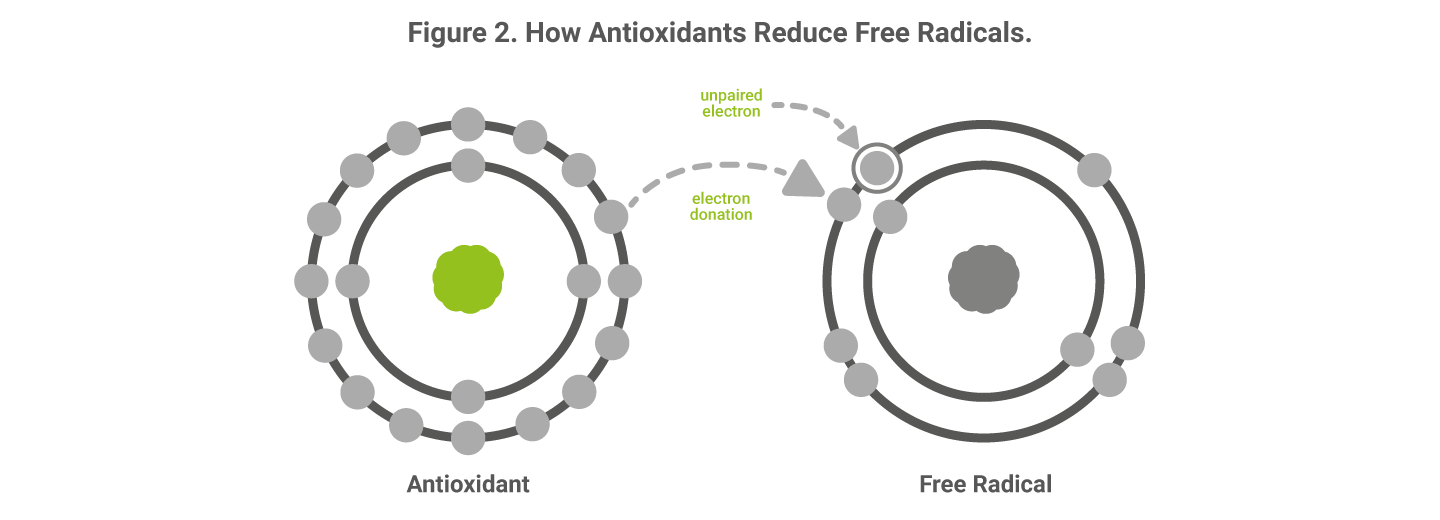
Free radicals are molecules with one or more unpaired electrons. Those containing oxygen are specifically referred to as reactive oxygen species—the most common being superoxide, but there are others. The unpaired electrons in free radicals make them unstable and highly reactive. Free radicals are created through normal metabolic processes and a low level of free radical generation is part of normal cell physiology. Even the generation of energy needed to fuel biological functions generates free radicals. The environment can also add to, or accelerate, the production of free radicals—exposure to excessive sunlight, heavy metals, and toxins can increase the number of free radicals in the body.
Free radicals are necessary for many other functions as well. One way the immune system works is to use the cell-damaging effects of free radicals to kill pathogens. The thyroid gland synthesizes its own free radical—hydrogen peroxide—to produce thyroid hormone. Nitrogen-containing free radicals interact with proteins in cells to produce signaling molecules. The free radical nitric oxide helps dilate blood vessels and acts as a chemical messenger in the brain. However, the same reactivity that allows for signaling and pathogen destruction, also poses a threat to DNA, RNA, proteins, and fatty acids.
The same free radicals can even cause damaging chain reactions as it reacts with a nearby fatty acid, stealing one of its electrons. This fatty acid is now a free radical, which reacts with a second fatty acid. As this chain reaction continues, the permeability and fluidity of cell membranes change, proteins in cell membranes experience decreased activity, and receptor proteins undergo changes in structure that either alter or stop their function. So are the “two faces” of free radicals—serving as signaling and regulatory molecules at physiologic levels but as highly harmful and cytotoxic oxidants at pathologic levels.
Oxidative stress: too much of a good thing.
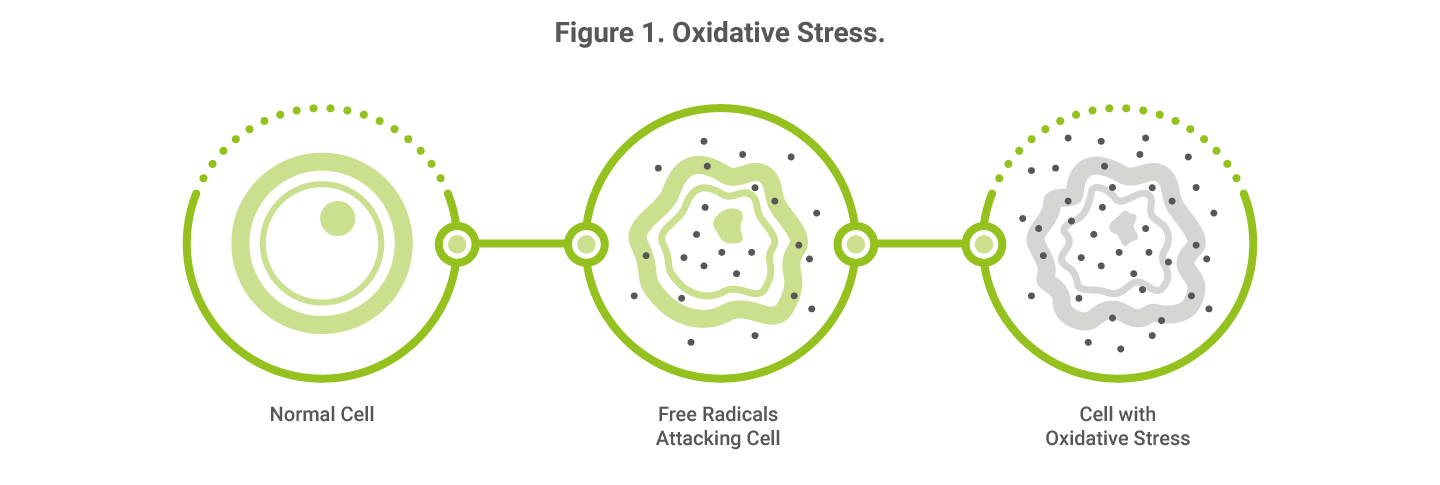
When the number of free radicals exceeds the body’s ability to eliminate or neutralize them, an imbalance occurs. Excessive free radical levels can cause damaging effects. Free radical-induced damage, when left unrepaired, destroys lipids, proteins, RNA, and DNA, and can contribute to disease and reduced productivity. Oxidative stress refers to an imbalance in any cell, tissue, or organ between the number of free radicals and the capabilities of the detoxifying and repair systems. Further, as some reactive oxidative species act as cellular messengers, oxidative stress can cause disruptions in normal cellular signaling mechanisms (figure 1).
Our production animals are exposed to numerous sources of oxidative stress. These can include heat (heat stress), pregnancy and lactation, and infections (such as mastitis). Psychological stressors—rehousing and group mixing, transport, feeding conditions—are also sources of oxidative stress. Sustained oxidative damage results only under conditions of oxidative stress—when the detoxifying and repair systems are insufficient.
 The defense against free radicals
Two major defense systems have evolved to minimize the impact of free radicals—non-enzymatic and enzymatic antioxidant systems. Antioxidants are molecules that can block free radicals from reacting with other molecules and can function both inside and outside the cell. Important non-enzymatic antioxidants include vitamins C and E as well as phytochemicals. Enzymatic antioxidant systems are responsible for protecting cells from free radical damage and include superoxide dismutase (SOD), glutathione peroxidase (GHS-Px), and catalase. These antioxidant enzymes play important roles in the first line of defense against free radicals (figure 2).
 The importance of trace minerals.
The role of minerals in enzyme functions has been studied extensively. Some enzymatic antioxidant system members—like SOD, catalase, and GHS-Px—contain trace minerals such as Cu, Zn, Mn, and Fe and are indispensable for the activities of antioxidants like Cu-Zn SOD and Mn-SOD. These SOD catalyze the conversion of superoxide free radicals into hydrogen peroxide and oxygen in the cytoplasm (Cu-Zn SOD) and in the mitochondria (Mn-SOD). Zinc also induces synthesis of metallothionein, a metal-binding protein that can scavenge hydroxide radicals.
One of the most important enzymes for protection from oxidative damage by free radicals is catalase. This enzyme contains four Fe-containing heme groups that allow reaction with hydrogen peroxide to form water and oxygen. Therefore, dietary deficiencies of Cu, Zn, Mn, and Fe markedly decrease enzymatic antioxidant activities and result in oxidative damage and mitochondrial dysfunction. As such, an important way to balance oxidative damage and antioxidant defense in animals is to optimize the dietary intake of trace minerals.
Organically bound trace minerals.
Despite the importance of trace minerals to the animal, they are often supplemented in an inorganic form—like sulfates or oxides. This makes them easy to produce and inexpensive to administer, but this frugality comes with disadvantages. Inorganic trace minerals—especially sulfates—easily dissociate in the upper gastrointestinal tract. The released free metal ions can form insoluble complexes with other dietary components or compete for transport mechanisms at the intestinal wall. As a result, trace minerals are often supplemented in diets at concentrations well above those required by the animal. This results in a high amount of unabsorbed trace minerals excreted in the feces, potentially contaminating the environment. As such, these extremely high concentrations are no longer permitted in feeds in some regions, like the EU.
Organically bound trace minerals, in contrast—typically called chelates—are trace minerals bound, for example, to a single amino acid or small peptide from hydrolyzed soy protein. Chelates have higher binding strength and are therefore better protected against antagonistic effects in the intestine. As a result, trace minerals are better absorbable and metabolizable, with a direct impact on the animal’s health, well-being, and productivity. E.C.O.Trace® trace minerals are organically bound to the amino acid glycine with numerous advantages over inorganic trace minerals. E.C.O.Trace® glycinates have been successfully used in feeding high-performance animals for over 15 years and the superior absorption of E.C.O.Trace® minerals over inorganic sulfates has been demonstrated in scientific studies. We have extensive experience in organically bound trace minerals—contact us to find out how E.C.O.Trace® glycinates can benefit your animals and your business.
Trace minerals can only provide nutritional value to the animal when they are absorbed. It is not only sufficient to have the correct amount of trace minerals but also the source of trace minerals matters greatly. This is especially important in today’s animal production environment, where the pressure continues to increase to raise healthy animals with less waste.


