Poultry Under Pressure: Understanding & Combating Thermal Stress.
As the year 2023 cemented itself as the hottest on record, the increasing reality of global climate change casts a long shadow over various industries, including poultry production. Poultry are particularly vulnerable to temperature fluctuations, experiencing significant health and productivity decline when exposed to thermal stress. With extreme weather events becoming more frequent, understanding the impact of thermal stress on poultry and developing effective management strategies are critical not only for bird welfare but also for the sustainability and profitability of the entire poultry production chain.
Understanding Temperature’s Impact on Poultry.
Birds, like mammals, are warm-blooded and can maintain their own body temperature. Unlike mammals, birds do not have an absolute body temperature and can vary greatly. A bird’s core body temperature is normally around 41 °C (40 – 42 °C), but can get as high as 45 °C.
A bird’s body functions most efficiently in the thermoneutral zone. This means that the bird maintains its body temperature without using additional energy for thermoregulation. For most poultry, this is between 18 and 24 °C. However, this can vary depending on age, body weight and feather cover. Temperatures outside the thermoneutral zone can cause thermal stress.
However, it is not only the ambient temperature that needs to be considered. There is an interplay between temperature and humidity that affects an organism’s ability to keep cool. This is the enthalpy of air. One can consider it as the amount of energy stored in the air. The more energy stored in the air, the less energy an organism can transfer to the air for thermoregulation.
A range of multifaceted and complex functional mechanisms are triggered by thermal stress. These mechanisms are aimed at maintaining or restoring balance and allowing the birds to cope with a challenging environment. Some of these key mechanisms include:
Heat dissipation
Respiration changes
Blood flow regulation
Electrolyte balance
Hormonal responses
Heat shock protein upregulation
Behavioral adjustments
Out in the Cold.
Low ambient temperatures typically cause cold stress in poultry, requiring the bird to expend energy that would otherwise be used to maintain health and productivity. As such, cold stress can have negative effects on the antioxidant, immune, and neuroendocrine systems, and can even lead to death.
Birds experiencing cold stress may have increased feed intake to meet caloric needs for thermoregulation, but reduced weight gain and feed efficiency. However, if it is very cold, birds may reduce their feed and water intake as they minimize movement. Cold stressed poultry often have decreased growth rates, reduced egg production, and an increased susceptibility to health problems such as respiratory problems.
Poultry under cold stress exhibit several observable behaviors that are closely related to energy conservation, such as huddling, fluffing feathers to trap warm air, shivering, and seeking shelter (Figure 1).
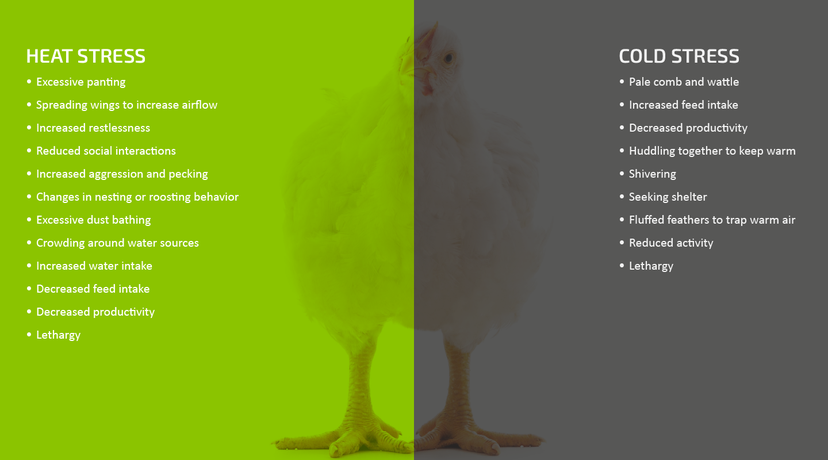 Figure 1: Signs that your birds are thermally stressed.
Too Hot to Handle.
Poultry’s naturally high body temperatures make heat stress more challenging to manage than cold stress. Poultry do not sweat and primarily regulate their body temperature by panting. This means that when both ambient temperature and humidity increase, natural cooling mechanisms become ineffective, which can lead to heat stress. The level of discomfort the bird is thought to experience can be estimated with a Temperature-Humidity Index. The higher the number, the greater the discomfort the animal is thought to experience and the more critical measures are needed to support the animal (Figure 2.)
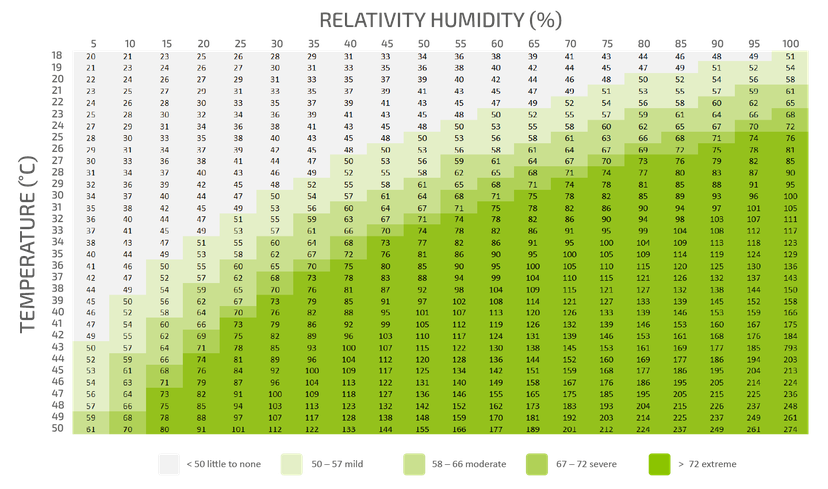 Figure 2: Temperature–Humidity Index. A measure indicating the level of discomfort poultry is thought to experience because of the combined effect of temperature and humidity. Numerical values < 50 correlate with little to no heat stress; 50 – 57 correlates with mild heat stress; 58 – 66 correlates with moderate heat stress; 67 – 72 correlates with severe heat stress, and values > 72 correlate with extreme heat stress.
Heat stressed poultry need to dissipate excess body heat and will exhibit certain behaviors to indicate that they are overheated. Poultry will exhibit increased panting as the most common sign. Birds experiencing heat stress often have increased water consumption and reduced feed intake, resulting in reduced productivity.
Increased dust bathing may help cool them down, and spreading or drooping their wings can increase airflow to their bodies. As birds become increasingly uncomfortable, they may become more restless, change their nesting or roosting behavior to seek cooler locations, or even become more aggressive with increased pecking (Figure 1).
Thermal Stress’ Impact on Physiologic Systems.
Thermal stress affects entire systems. One important system is the immune system. As the body focuses more on temperature regulation, it diverts energy away from immune functions, leading to immune suppression. Thermal stress also triggers the release of stress hormones such as cortisol, which further suppresses the immune response. This immunosuppression increases susceptibility to disease, ultimately reducing productivity and increasing mortality. In addition, immunosuppression reduces the effectiveness of vaccinations.
Thermal stress increases the production of reactive oxygen species. This oxidative stress damages immune cell components, impairing their function and ability to eliminate pathogens. On top of this thermal stress also perturbs the gut microbiota. As the microbiota plays a critical role in modulating the immune system and protecting against pathogen invasion, thermal stress events often result in increased susceptibility to infections through the gut as well.
Thermally stressed birds have caloric deficits due to increased metabolism during cold shocks or decreased feed intake during hot periods. This energy deficit ultimately impairs growth, reproduction, immune function, and performance. In addition, extreme heat can cause heat stroke, and severe cold can cause frostbite and tissue damage.
Moreover, thermal stress can disrupt the reproductive cycle of laying or breeding hens by interfering with the processes involved in ovulation and egg formation. This results in reduced egg production, poorer egg quality (due to thinner shells), and higher rates of egg abnormalities. Thermal stress has also been shown to reduce egg hatchability.
Overall, thermal stress has a marked impact on poultry, which ultimately results in significant financial implications due to its effect on zootechnical performance. Today, genetic approaches offer great potential for combating thermal stress. The selection of poultry breeds or genetic lines that are more tolerant to thermal stress is becoming increasingly important in poultry breeding programs. This will improve overall resilience and productivity, especially in hot climates and during heat waves.
Beyond Management: A Nutritional Arsenal for Thermal Stressed Poultry.
Beyond structural and environmental strategies to manage thermal stress, such as ventilation, stocking densities, and housing design, ensuring access to cool, clean water and adjusting feed formulations and schedules remain the most important tools for managing thermal stress. Several nutritional strategies have been proposed to mitigate the destructive effects of thermal stress in the poultry industry. Some of these strategies include the use of feed additives and dietary supplements that contain minerals, vitamins, and other nutrients designed to help birds better cope.
Antioxidants such as selenium, vitamins E, and C, and certain B vitamins can help mitigate the negative effects of thermal stress on poultry. These antioxidants support the immune system and help reduce oxidative stress caused by thermal stress.
Amino acids, such as lysine and methionine, are important for maintaining protein synthesis and muscle function. Supplying these amino acids can support growth and performance during periods of heat stress. Ingredients such as probiotics, prebiotics, botanical extracts, and zinc can help boost the immune system of birds, reduce the effects of inflammation, and help them better cope with stress.
At Biochem, we have a comprehensive range of feed additives and dietary supplements, including our Hepatron® betaine feed additives, E.C.O.Trace® organically bound trace minerals, carefully selected phytoactive ingredients and probiotic strains, as well as the LiquiVit and Stress Pack® ranges. Many of these are water-soluble and can help stimulate appetite and maintain feed intake, ensuring birds continue to receive adequate nutrition in the face of thermal stress challenges.
Our ingredients and formulations are tailored to combat thermal stress and can help poultry maintain performance, reduce mortality, and improve overall well-being.
Insulate your poultry against thermal stress!


